ACN Trip to Nepal: “You return home humble and pensive.”
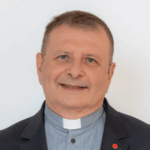
Johannes Heereman von Zuydtwyck, executive president of the international Catholic charity Aid to the Church in Need (ACN), and Véronique Vogel, head of the Asia section, have returned from a project trip to Nepal. In an interview with Maria Lozano, they talk about shamans, healings and the impressive testimony of a small Catholic parish in the former Hindu kingdom.
For us Europeans, Nepal is a very exotic country and only known as a mountain paradise. What were your impressions of Nepal?
It is a land of the extremes: Himalayas and plains, dry river beds and raging torrents, modern city districts and “medieval” villages, bungalows and straw huts, academics and illiterates. But everywhere a lot of friendly, congenial people.
The first anniversary of the devastating earthquake in Nepal was marked several weeks ago. Could you still see signs of the destruction and devastation?
Yes. Signs of this catastrophe can still be found in many places, from completely destroyed houses to large and small fissures. In the poor districts, people are living in near-derelict buildings that look as though the next gust of wind will blow them over. But somehow, these houses are still being held up by the window and door frames. A number of families, even some with small children, are still “living” in tents on a paved square in the middle of Khatmandu. You don’t even want to think about where and how they are cooking their meals, much less answering the call of nature.
According to Religious Freedom in the World Report, which was published last November by Aid to the Church in Need, there were only 8000 Catholics in the Apostolic Vicariate of Nepal. What was it like to visit this small minority?
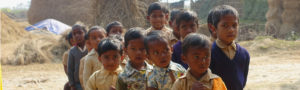
Extremely impressive. It is a missionary church: religious sisters and priests often live under the most basic conditions in the villages of the Hindu minority, bearing witness to the love of God through their presence. The Jesuits run large school complexes. The students attend school up to two hours a day to further develop themselves and their country. The number of believers is small, but growing.
What impressed you the most?
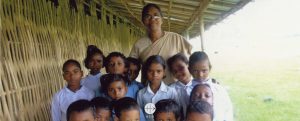
The life of three religious sisters who live in a straw hut, take care of the sick and teach the children. Very moving was also the testimony of a priest who studied in Rome and held a managing position in the apostolic vicariate. For three years, he had lived in a village that is always difficult to reach, but is almost completely cut off during the monsoon season, in order to take care of the small number of Catholic families living there and to free others from their fear of the supposed evil spirits.
What was the most beautiful moment of the trip for you?
The testimony of a former shaman: he explained how he had converted to Catholicism after he had felt the power of Catholic prayer while attending a Catholic service. Since then, he has converted both his own village as well as several neighbouring villages to Christianity. When we asked why the former Hindus converted to Catholicism, he answered as though it were a matter of course: because of the many healings. Other catechists who preach the gospel in the villages, settle family disputes and pray with the people as they face various hardships, also gave this as a reason. When they talked, we sometimes felt as though we were back in the times of the Acts of the Apostles.
What do you feel when you not only know of the places and the people from newspapers or television, but were there yourself?
When you think about the poverty, the for us inconceivable degree of air pollution in the cities, the ghastly road conditions, the difficult living conditions of most of the people who have to do very hard physical labour and yet are unbelievably friendly and approachable, you return home humble and pensive.
Shortly after your trip, on 18 April, the parish house of the Assumption of the Blessed Virgin Mary Cathedral of the Apostolic Vicariate of Nepal, which lies on the outskirts of the capital of Kathmandu, was damaged by an arson attack*. Did you hear about Christians being discriminated against in the country during your trip? Did you have the impression that Christians have a difficult time in the country?
The news of the arson attack shocked us. This was a centre of the Catholic church in Nepal that had made an especially profound impression on us. It radiated a deep sense of peace. Corrugated iron intended for rebuilding the roofs of the earthquake victims of the parish was being stored in the courtyard. Several years ago, a bomb had been set off in this church by radical Hindus, claiming the lives of six victims. The church had in the meantime been restored. Unfortunately, it is true that political and religious fanatics are spreading fear and terror among what are otherwise a peace-loving people. However, we were repeatedly told that, in general, Christians, animists, Hindus, Buddhists and the very small number of Muslims coexist peacefully. The latter very clearly disassociate themselves from the other groups and are not particularly receptive to interreligious initiatives; the animistic tribes, on the other hand, are very open to the Christian faith.
What work does Aid to the Church in Need do in Nepal? How do you help the small local minority?
Since most of the Catholics live in the eastern part of the country, a large part of our aid currently goes to this region. After the earthquake, we sent immediate financial aid to the vicariate, but other than that, we have supported the small Catholic communities with many small projects, for example by helping them buy a reliable vehicle to carry out their pastoral work. The diocese extends across the entire country! Thus, parish visits require a lot of time and long car rides.
Also worth mentioning is that a Christian Literature Centre is being set up. This centre will use a lending system to ensure that Catholic families all over a district have access to Bibles, catechisms and prayer books. In this way, Catholics and other interested parties are placed in closer contact to religious Christian books.
Finally, we should not forget the Mass stipends. They are a source of beneficial financial support for the vicariate. Most Catholics are very poor and have only very recently come to the faith. They therefore have neither the necessary funds nor are they accustomed to helping their priests.
Based on the impressions you have brought back with you from the trip, which projects would you like to support in Nepal in the future?
As we described above, during the trip we realized just how important the work of the religious sisters is for the people, and how wretched some of their housing is in the villages. To provide a concrete answer, we would like to help build a new convent for a small community of religious sisters in eastern Nepal.
I am also very happy that we can help a group of young Catholic Nepalese attend the Asian Youth Day taking place in Yogyakarta, Indonesia, from 30 July to 9 August 2017. A small community like this lives from encounters with other believers.

Recommended