A Church that goes to the poorest of the poor
ACN dedicates its Lenten campaign to helping oppressed Christians in North India
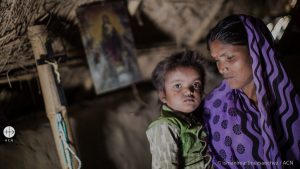
Bita lives in a mud-walled hut with an earthen floor. Actually, it is only a few mud walls covered by a plastic sheet. Her old house burned down a year ago. “That was a great misfortune.” One of the children saw the fire start just in time and was able to pull the younger sister out of the house, the mother of three says. The church community then helped her obtain a small loan. This allowed her to temporarily move into a nearby dwelling, although it is not much more than a makeshift shelter of mud and straw: one room to sleep in, one to cook and live in, both of them only about three by three metres.
Most of the Dalits live in extremely close quarters, and their space is even further restricted. “There are a lot of things that Dalits are not permitted to touch, they may not be touched and may not set down their things everywhere,” Father John explains. His name has been changed for his safety. For decades, he has been working with Dalits, the members of the lowest caste in India. “The cooking area, for example, is a holy place. Once, I put down a drinking glass in the wrong place. It was a huge drama,” the priest recalls. For the host he was visiting, it was an affront that made it “unholy”. For the Dalits it is like a ban. They believe that disaster will befall anyone who doesn’t respect it.
Plagued by a spirit world
Bita once believed this as well, “I was very scared and afraid of bad spirits.” It was an imaginary world that began to plague her more and more. “I was even afraid to get out of bed and walk. I became ill.”
Then she met a Christian woman who told her about the Bible. The message that there is a God who is a champion of the poor and the lowest in society, who invites them to join His community, goes beyond anything that the Dalits can imagine. This Christian invitation also began to exert its influence on Bita. Today, she is being pressured by her neighbours. Most people in the village are members of other religions and distrust how Bita is growing closer and closer to the Catholic community. “I fear that they are also a little envious because I am now part of a community that supports me. That I am feeling better again, since I started going to church.”
Strengthened, yet under new threat as a minority
Anyone who visits Bita can feel some of the anxiety that hangs in the air. Bita and a small handful of other people have now converted to Christianity. They are a minority among neighbours who are trying to get Bita to leave the church. However, she remains true to her faith. “I have also convinced my husband. He stands by me now. We have more joy in our lives and also earn a little more. We have hope again. We have put our faith in God and the church.”
When asked which passage from the Bible she likes best, she takes a moment to reflect. “Jesus says, love thy neighbour. That gives me strength.”

Recommended