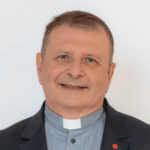
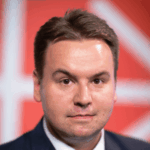
“The Catholic Church does exist in Morocco. And it is a Samaritan!”, Bishop Cristóbal López of Rabat says
Find out first-hand information about the country Pope Francis will visit at the end of March
The universality of the Catholic Church becomes palpable in many places where Christianity is in the minority, including Morocco, a country with 37 million inhabitants, 99.9% of whom are Muslim and only 0.08% are Catholics. A small, but great Church carries out its pastoral work among the Catholic faithful of the country. Primarily, however, the Church supports the most disadvantaged among the Moroccan population and the thousands of young people who cross the desert from sub-Saharan Africa looking for a future in the idealised Europe. Pope Francis is planning to travel to the region situated at the border between Africa and Europe on 30 and 31 March and, in response to an invitation issued by King Mohammed VI and the bishops in the country, visit the cities of Rabat and Casablanca.
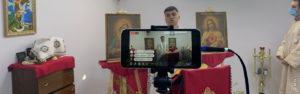
María Lozano held an interview with Monsignor Cristóbal López Romero, the bishop of Rabat, for a television broadcast produced by Aid to the Church in Need (ACN) . The Salesian of Don Bosco talked about what it means to live and work in this North African nation.

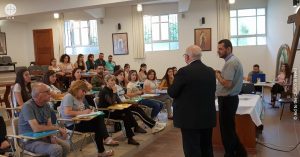
“The Catholic Church does exist in Morocco,” the bishop proudly said at the beginning of the interview. “It is a vibrant and young church blessed with mercy and with a strong desire to bear witness.” The North African country has two cathedrals, one in Tangier and a second in Rabat. The first was built during the time of the Spanish protectorate, the second during the time of the French protectorate. Bishop López Romero continued, “More young than old people come to our churches, more men than women, more black than white people.” The members of the Church in Morocco are mostly foreigners, faithful from more than 100 different countries. They generally work in companies that operate subsidiaries in Morocco. In addition, many of them come from countries south of the Sahara, such as the Congo, Senegal or the Ivory Coast. They move to Morocco to pursue their studies and find the “feeling of security” they are looking for with the Catholic Church. The Catholic religious who work in the country hail from more than 40 different countries. Bishop López explains, “Being Catholic means being universal, global.” This universality requires people to put aside that which makes them distinct and concentrate on what is shared. “We look for what is important, at the essential. The differences enrich us, we are open with one another and see the differences as an opportunity, not a problem.”
Church as a Samaritan
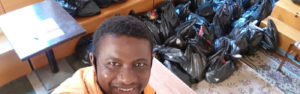
The Moroccan Church and the charities it works with take in and help who are weakest, irrespective of their background. Primarily, they are active within Moroccan society and for the immigrants coming from countries south of the Sahara, who are trying to reach Europe or remain in North Africa. “The Church takes in and cares for those in need, that is, it is a Samaritan Church,” the interviewee said. Through its Caritas organisation, Morocco takes care of thousands of migrants who cross the Sahara and then, after having completed this difficult crossing, “remain stuck” in the country, without being able to continue on to Europe. “These people need care and a sympathetic ear. Most of them are sick when they arrive and many of the women are pregnant. The Church “takes them in. It protects, promotes and integrates them, just as Pope Francis has asked us to do.” The work of the Church in Morocco is so important that “even the Muslim authorities appreciate its efforts.”

When asked why young people are fleeing Africa, Bishop López explained that economic reasons are the key impetus for the majority of the young migrants. They are fleeing poverty and unemployment, but many of them are also fleeing war, hostilities, persecution or natural disasters. According to the bishop of Rabat, the migration problem in Africa will be impossible to solve as long as “30% of the food produced continues to be thrown out in Europe,” and people continue to live “in excess and grandeur” while at the same time expecting those “who live in wretched circumstances to passively accept their fate” and society remains unaware of its behaviour. “It is certainly not Christian and can even be called inhumane that Europe protects its borders so that it does not have to share what belongs to all and what Europe has appropriated,” the religious expressed his outrage. The bishop called to mind the words of Pope Francis: “Capitalism kills.” “Instead of providing aid, we should pay for the raw materials that we exploit. We should make sure that the multinational corporations pay the taxes that they owe.” He believes that Africa cannot be helped with “crumbs, but with justice and development plans. We are nothing without love, we are even less without justice.”
“The young Moroccan” – the bishop returned to the previous topic – “is imprisoned in his own country.” Morocco is suffering because of its geographical location, from the fact that there is no realistic way to leave the country. To the South lies the vast Saharan desert, to the West, the Atlantic, to the East, Algeria – and the border to this country is closed due to war – and to the North, Europe. “Many young people from Morocco point to Spain and ask, ‘Why are they able to come here, but I can’t go there?’”
Does religious freedom exist in Morocco?
An entirely different issue, which Pope Francis will surely be confronted with during his trip, is the status of religious freedom in the country. As the pontifical foundation ACN concluded in the Religious Freedom in the World Report 2018, according to its constitution, the Kingdom of Morocco is a sovereign Muslim state. Article 3 reads: “Islam is the religion of the state, which guarantees to all the free exercise of beliefs.” However, the constitution prohibits political parties, parliamentarians or constitutional amendments to infringe upon Islam. The European Parliament acknowledges that religious freedom is constitutionally enshrined in Morocco, but adds that “Christians and especially Muslims who converted to Christianity face numerous forms of discrimination and are not allowed to set foot in a church.” Under the Moroccan Penal Code, proselytism by non-Muslims, that is to “shake the faith” of the Muslim population, is illegal. The distribution of non-Islamic religious materials is also restricted by the government.
Further information: https://religious-freedom-report.org/report/?report=471

Recommended