Mali: Joy at the release of the priest kidnapped more than three weeks ago
The pontifical foundation ACN confirms the release of Father Leon Douyon, Catholic priest from Ségué in the Mopti region of Mali, yesterday afternoon, Tuesday 13 July.
In a message received by the ACN foundation, Mgr Jean-Baptiste Tiama, Bishop of Mopti, expressed his joy at the news: “Our brother Léon Douyon was separated, far from us. This afternoon he has returned to us and we are very happy”.

Father Leon was kidnapped on June 21 along with four other faithful on the road that leads from Ségué to San, as they were on their way to a funeral. Four of the hostages were released within hours, but the priest was held by the jihadists.
Bishop Tiama thanked “all the acquaintances and strangers who contributed to his liberation.” Father Léon was released near Bandiagara, where he is currently resting before returning to Mopti, the bishop reported.
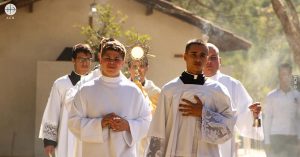
The prelate also asked each priest of the diocese to celebrate a Mass of thanksgiving for the return of the priest. The faithful of Ségué, where Father Leon serves, gathered immediately upon receiving the news to give thanks for his release. Images of the joyful celebration have reached ACN.

Since 2012, jihadist groups linked to al-Qaeda and the Islamic State have carried out kidnappings in order to obtain finance or exert political pressure. These groups include Jamaat Nusrat al-Islam wal Muslimeen (JNIM) and the Islamic State of the Greater Sahara (ISGS).
In addition to an increase in jihadist activity with a clear religious component to impose sharia and Islamic fundamentalism among the population, there are serious conflicts between ethnic groups and communities in the Mopti region. The conflicts, largely focussed on ownership of land and resources, are between the Fulani, mainly Muslims, and the Dogon, who practice mostly ethnic religions and some Christians.
According to data from the ACN Foundation’s Religious Freedom report, the Sunni branch of Islam predominates in Mali. About 13% of the population belongs to other religions. Christians make up just over 2%, with two-thirds of them Catholic and the other third Protestant. Mali is also home to traditional African religions (almost 9% of the population); some Muslims and Christians also incorporate African traditions into their ritual observances.

Recommended