“It is absolutely essential that the war stops,” says Gaza’s parish priest
Although the media attention has died down since the ceasefire, the Gaza Strip continues to sink into an unprecedented humanitarian and health crisis. Speaking to Aid to the Church in Need (ACN), Gaza’s Catholic priest, Fr Gabriel Romanelli, described the “very serious” conditions marked by the daily suffering of the population.
“The situation continues to be very serious in the whole of the Gaza Strip,” says the Catholic parish priest of Gaza, Fr Gabriel Romanelli, while also issuing an urgent appeal: “Continue to pray, promote justice and peace, and provide material support to the suffering population.” While large-scale bombing has halted, the violence has not yet ceased. “Some bombing continues,” says the priest, “notably behind the Yellow Line. Houses have been destroyed, deaths and injuries continue to be recorded.” The Yellow Line designates the military frontier established at the time of the ceasefire of 10 October 2025. It separates the zones controlled by Israel, in the east and the south, from the zone controlled by Hamas in the west, where the Holy Family Parish of Gaza City, part of the Latin Patriarchate of Jerusalem, is situated.
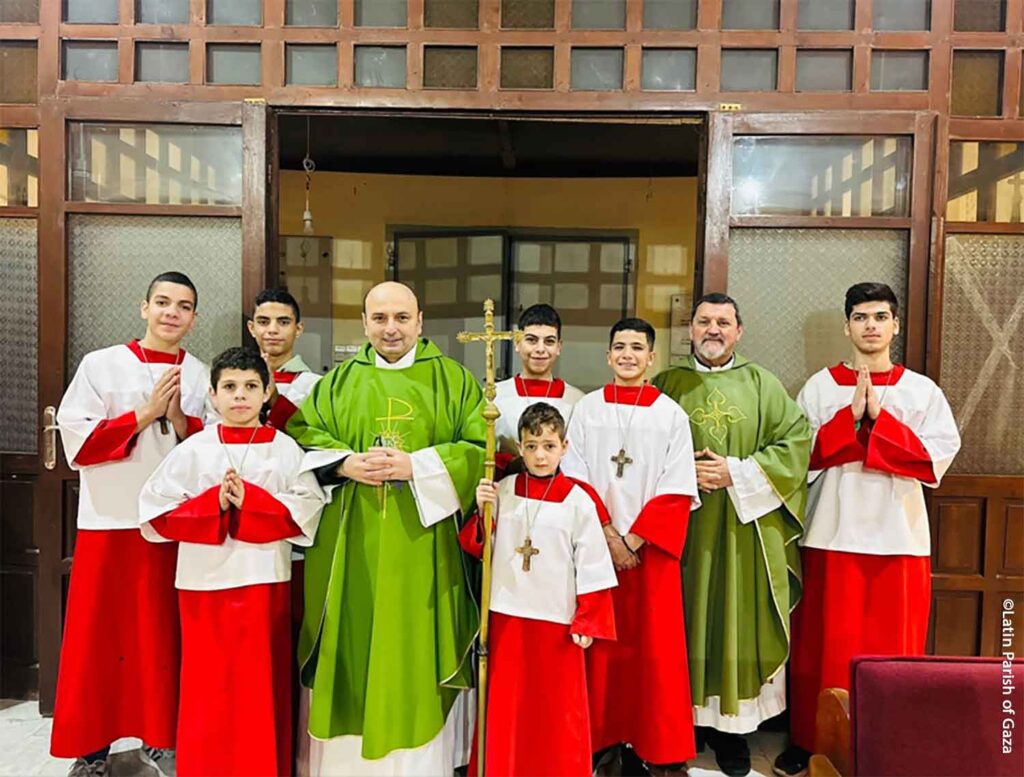
“The war is not over, even if the media makes it look like it is,” insists Gaza’s parish priest. As thousands of people continue to suffer, Fr Gabriel sees few signs of hope: the borders are closed, the electricity and water infrastructure is destroyed, the water is often poorly treated, badly stored or contaminated during transport or distribution, encouraging the spread of disease. Fr Gabriel speaks directly in his message: “It is absolutely essential that the war stops. It seems that no one in the world is really involving themselves in an effective way. The 2.3 million inhabitants of Gaza need at the very least to have the minimum human conditions to rebuild their lives. There are very many sick and wounded people without access to suitable medical care or who are waiting to be able to leave the enclave for treatment because the hospital system has become a phantom.”
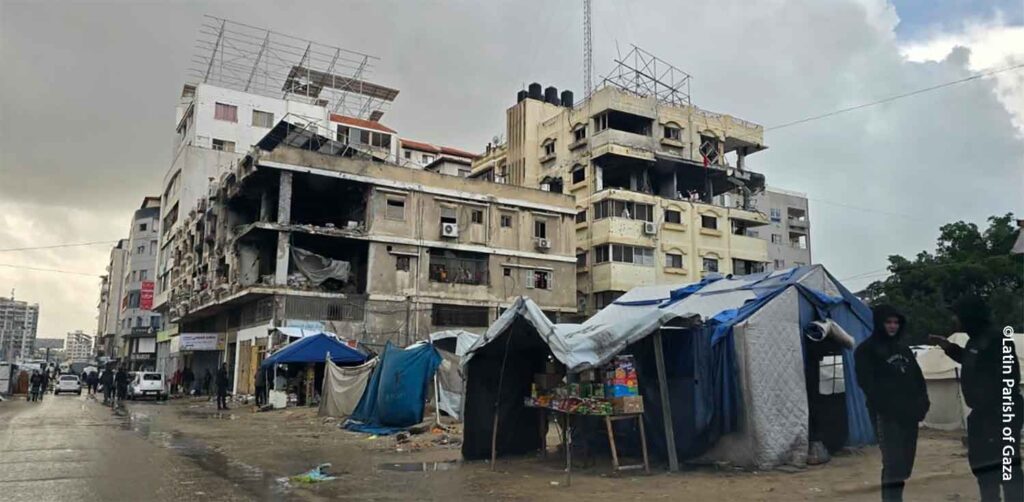
The situation for the children is particularly alarming. According to information from UNICEF, passed on by the Gaza priest, 100 children in the strip have died since the beginning of the ceasefire, almost one child per day. “They did not die of natural causes,” he says, alluding to the direct consequences of the bombing but also the cold and the unsanitary conditions. Most of the population today lives in tents, exposed to the damp and a particularly harsh and rainy winter. “Respiratory and digestive diseases are multiplying. We have all fallen ill more than once,” says the priest, who originally comes from Argentina and has recently recovered from a virulent bout of flu. “The epidemics are taking a turn for the worse because of the lack of heating, proper shelter and medicine.”
The torrential rain has also aggravated the situation, causing buildings to collapse. “Most of the buildings have been demolished, and those that are still standing are very fragile,” says Fr Gabriel. “One of our schoolteachers lost five members of his family in such a collapse,” he adds.
Indispensable humanitarian aid
In this overall context, humanitarian aid is vital. Most of the inhabitants have lost their work, homes and resources. “Since the ceasefire, goods are managing to come in, but they remain inaccessible to a population without financial means,” emphasises Fr Gabriel. “Aid is therefore indispensable and must be ramped up. Food, blankets, essential products, medicine: the needs are immense,” he warns, while rejoicing that, thanks to the Latin Patriarchate of Jerusalem, aid has been able to enter. “The Patriarchate continues to do an enormous amount of good for thousands of families in Gaza,” he emphasises, thanking friends and international partners such as ACN.
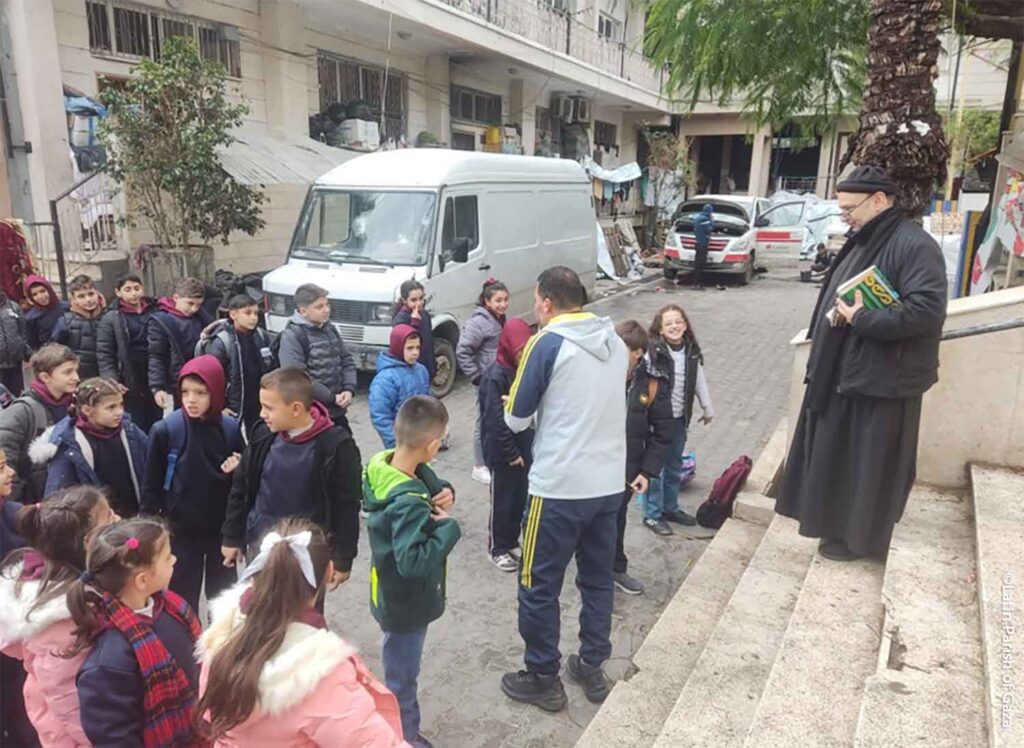
Education has also been seriously affected. Before the war, the three Catholic establishments belonging to the Latin Patriarchate and that of the Rosary Sisters welcomed around 2,250 pupils, but only 162 children have been able to take up school again. “The main problem is space,” explains the priest, “because refugees are staying in the school buildings.” Currently around 450 people are still taking refuge in the parish complex, and 100 have decided to return home. Because education remains an act of hope, the parish has reached out to two large independent private schools (non-confessional and non-governmental) in its neighbourhood of Zeitoun and have distributed exercise books, pens and basic material as these resources remain scarce. Before the war, one of these schools had 1,400 pupils and the other 1,500. Amid the difficulties, however, spiritual life remains a pillar for the parish. “The heart of our life is always our Lord in the Eucharist,” confides Fr Gabriel.