Ethiopian Spiritans evangelising local cultures
In the ancient Christian nation of Ethiopia there are nomadic groups who have never heard the Gospel. The Spiritans are working with these communities to spread the Good News and evangelise the culture, which involves dialogue with controversial traditions.
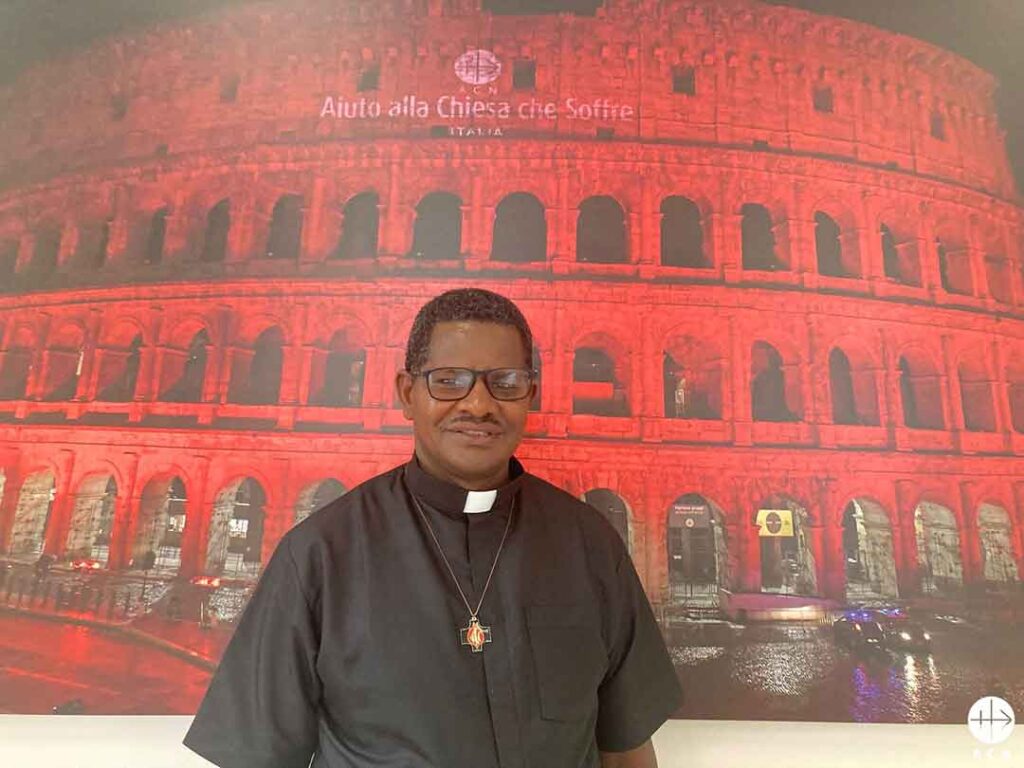
“Every community has its own culture, and of course, their culture is beautiful,” says Fr Kilimpe Garbicha, speaking about the nomadic Hamar people of the Omo Valley, southwest Ethiopia. Ordained in 2013, Fr Kilimpe has been the Provincial Superior in his native Ethiopia since 2022. During a recent visit to the international headquarters of Aid to the Church in Need (ACN), he spoke about the work of the Spiritans in the country, including their service as missionaries to the Hamar people.
Going out to the margins
“The Spiritans first came to Ethiopia in 1972,” says Fr Kilimpe. “The charism of the congregation is to go where the Church is lacking personnel or where no one else is going.” For this reason, the Spiritans are present in remote rural areas in Ethiopia, ministering to nomads who have never heard of Jesus.
“The people are living their own culture. We want to have a dialogue with their culture,” says Fr Kilimpe, about the Hamar.
Some aspects of that culture can seem peculiar to outsiders, he explains, giving the example of bull jumping. “This bull jump is a sort of rite of passage for young men. They put four or five cows, side by side, and he jumps on to them and walks over, doing it a number of times, depending on his strength.” The ritual has become a tourist attraction, bringing some money into this very poor region of Ethiopia.
“Large scars are left on their bodies”
There is, however, one aspect of the rite that Fr Kilimpe finds troubling. When the young man has reached this milestone in his life, the women and girls – relatives and people from the villages – celebrate with him. As part of the celebration “we see women being whipped with branches by the young man”, says Fr Kilimpe. “For them it’s a way of joyful expression, but the whipping is very cruel, harming the bodies of the women and girls. You see the women bleeding and they are left with large scars.”
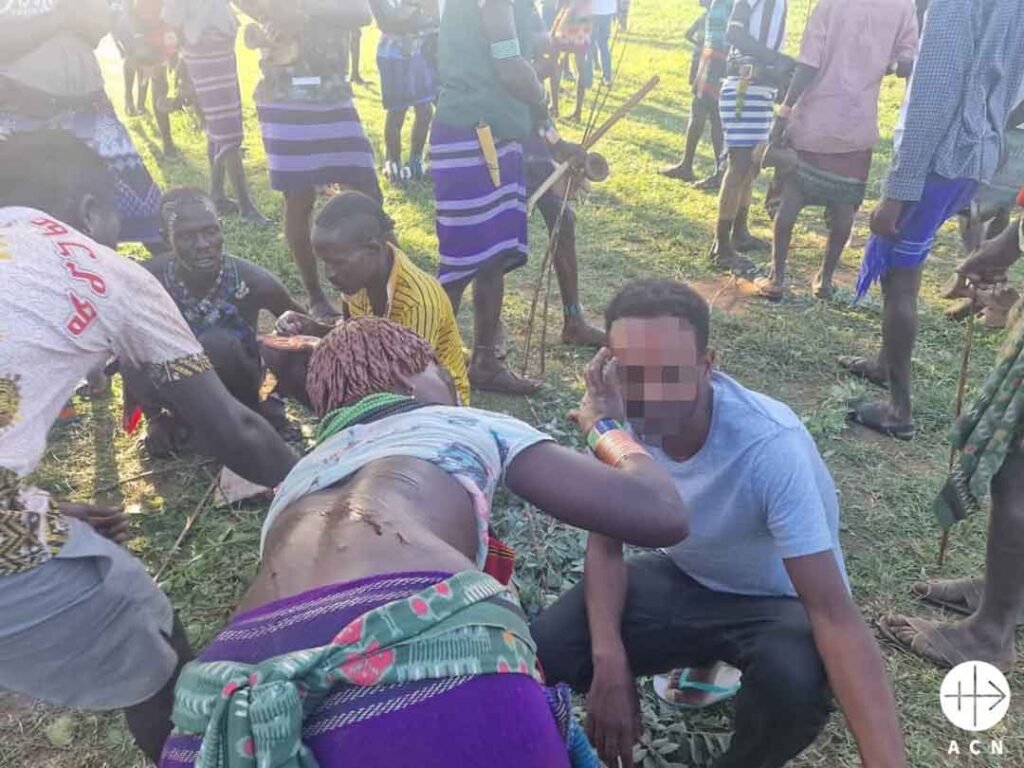
Fr Kilimpe explains that the women and girls often ask to be struck, as it is seen as a joyful expression and a way of them sharing in the rite. “I saw a little girl, aged nine or ten, who wanted to be whipped. Her mother said no but the rest of her family allowed it. She was whipped, and she was smiling. For me it was unacceptable. I saw the scar on her body, and it touched me. It left with me the mark, almost.”
“As a missionary, I feel called to do something. It is part of evangelisation; it is part of this dialoguing with the culture,” the Spiritan explains, adding that this involves a lot of sensitivity and respect. “It is about small conversations, without judging them. They can still keep their customs, but can we do it an alternative way that is softer and doesn’t harm people’s bodies? It is a slow process that involves a lot of dialogue.”
A holistic approach
Ethiopia has a rich and ancient Christian tradition, mostly Oriental Orthodox. It is quite rare to have a significant number of Catholics in an area. According to Fr Kilimpe, what the small Catholic Church brings in particular to the country is integral human development. “We bring a holistic approach to evangelisation. Heart, mind and body need to be fed,” he explains. This not only includes issues such as those surrounding the bull jumping rite but other topics from the provision of water to encouraging the education of girls.
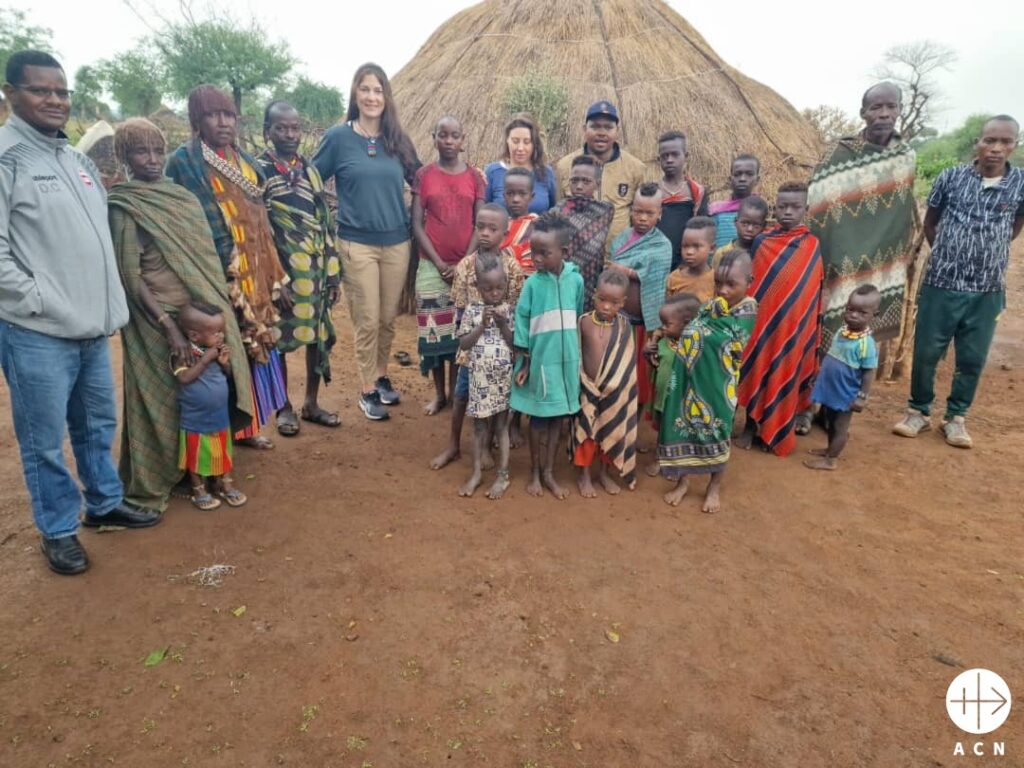
As part of this approach, Fr Kilimpe is very respectively of the Hamar people’s culture. “I don’t want people to see their culture as bad,” he says. “We don’t undermine it. We dialogue with and evangelise the culture. We as Catholics don’t create divisions. We create unity and respect culture and engage with it. We learn their language and live their way of life. We find important things in the culture that can help people to learn the Gospel.”
This missionary work with the nomads in the Omo Valley is only part of the work of the Spiritans in Ethiopia. The Spiritans also run parishes, prison ministries and schools, are involved in humanitarian work and act as chaplains for the African Union’s office in Addis Ababa. Fr Kilimpe and the Spiritans are very grateful to ACN for its support. The charity has assisted the congregation with more than ten projects over the last five years, including the renovation and construction of churches and other buildings, transportation, the provision of Mass stipends, and the translation of texts into local languages.

Recommended