Bangladesh – the Catholic Church demands more rights for ethnic minorities
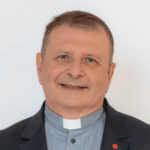
[vc_row][vc_column][vc_column_text]Königstein, Germany 25.07.2017. During a visit to the international headquarters of the Catholic pastoral charity and pontifical foundation Aid to the Church in Need (ACN), Archbishop Moses M Costa of Chittagong lamented the fact that the rights of the ethnic and religious minorities are not explicitly mentioned in the Constitution of Bangladesh. „The government does not acknowledge their rightful existence and ignores them, so that they have scarcely any possibility of development“, he told ACN. „Moreover they are often discriminated against in the workplace, even in some schools, since they do not speak the national language. When the ethnic minorities suffer, the Church also suffers, for 60% of our Catholic faithful belong to this group.“ The Catholic Church is the only institution standing up for the rights and dignity of these peoples and striving to respect and promote their culture.
Archbishop Costa described how, following the flooding last year in the so-called Chittagong Hill Tracts, a mountainous province within his archdiocese, the government had refused all help to the ethnic minorities living there and denied the existence of the problem. He also criticised the exploitation of the tribal peoples in the ship breaking yards of Chittagong Harbour, where unseaworthy ships are broken up into their component parts for reuse in other ways. For example, the steel components are dismantled and used as structural steel in buildings. „This work is carried out in very hazardous conditions and claims innumerable human lives. But I am not permitted to visit this place, because the authorities have refused me permission“, the Archbishop complained.
Asked about the attacks on Christians and on Church properties which have been occurring in growing numbers in this overwhelmingly Muslim country, the Archbishop acknowledged that these were generally due to a mixture of political and religious motives. On the one hand they were often attempts to unjustly gain possession of land and properties belonging to the tribal peoples, who are often Christians, but on the other hand there was also a religious aspect to them, which was growing more marked. There are a great many different Islamic groupings in the country, he explained. „Last year a thousand Bengalis attacked a parish in Chittagong, because many miles away two business men had been killed and we Christians were accused of having had something to do with it“, he told ACN, adding that the situation in Chittagong was „difficult and dangerous“.
Nevertheless, there are also reasons for Catholics to rejoice. After Pope Francis last November conferred the dignity of the Cardinalate on Archbishop Patrick D‘Rozario of Dhaka, not only were the Catholic faithful „overcome with joy“ but even the non-Christian population were „very happy“ about it, Archbishop Costa explained. The government had also „sensed that the Pope was according the country a special degree of recognition and honour“. Similarly, the raising of Chittagong to the status of an archdiocese in February 2017 had been a source of „great joy“. As a result of both of these events, „the Catholic Church was given greater importance“ in the country, he said. „Generally speaking, and despite its numerically small size, the Church in Bangladesh makes a significant contribution to the educational system through its schools and is likewise very active in the area of healthcare. It is widely respected by many people as a result.“
89% of the 156 million inhabitants of this Southeast Asian country are Muslims, with Hindus making up the second largest religious group at 9.5%. With only around 270,000 faithful, the Catholic Church represents a proportion of only 0.2% of the total population.[/vc_column_text][/vc_column][/vc_row]

Recommended