“A toxic mix of religious extremism and nationalism”
By Oliver Maksan
Many Christians in Israel are scared. They feel threatened by Jewish extremists in word and deed. The arson attack carried out by Jewish extremists in June of last year on the Benedictine monastery of Tabgha made international news. “What comes next?” Auxiliary Bishop Shomali from the Latin Patriarchate asked anxiously in an interview with Aid to the Church in Need (ACN) following the incident. More attacks followed this year. For example, anti-Christian scribbling on the Abbey of the Dormition in Jerusalem. “Death to Christians,” it said. The extremist rabbi Bentzion Gopstein is regularly making headlines. He is head of the Lehava group, which strictly opposes mixing Jews and non-Jews in Israel. The extremists have also set their sights on the Christians of Israel. In August 2015, Gopstein publicly called upon Israeli authorities to burn down all the churches in Israel, saying that this was the duty of a Jewish state. He believes that, as in history, Christians continue to work towards the goal of converting Jews and must therefore be deported. “If Jews cannot be killed, they can still be converted,” Gopstein said about Christians.
The Catholic Church in the Holy Land filed criminal charges against Gopstein on grounds of incitement following his appeal to destroy the churches. In a statement, the Catholic bishops said that the Catholic community in the Holy Land was scared and feels vulnerable. The rabbi was just recently interrogated by police. Proceedings may be initiated against him. Gopstein has been arrested and interrogated on numerous occasions in the past. However, up until this point charges have never been brought or a sentence pronounced.
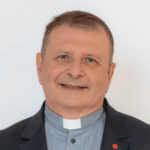
Father David Neuhaus, however, does not believe that remarks such as those of Gopstein are the main problem of the Christians in Israel. By order of the Latin Patriarchate, the Jesuit oversees the pastoral care of Hebrew-speaking Catholics in Israel. Born as the son of Jewish parents in South Africa, he immigrated to Israel and converted there to Catholicism. He is convinced, “The rhetoric of Gopstein is not where the most serious damage is done to Christian Palestinian Arab citizens of Israel.”
“I think that most Christian and Muslim Palestinians are perfectly aware that they are not treated equally and that discrimination is alive and well in a state defined as Jewish,” Neuhaus says. “This discrimination is structural, its most felt impact is in the budgeting for development in the Arab sector – it becomes palpable in education, health, employment, welfare, etc.”
Neuhaus estimates that “There are surely many Israelis who share [Gopstein and other extremists’] views. But only few would express themselves with such complete contempt for the religious other.” Father Neuhaus believes that the Jewish establishment does not do enough to counter Rabbi Gopstein’s views. “Although I think many might be disgusted at his vulgarity, what is needed is an educational campaign among the Orthodox that teaches respect for the religious and national other.”
As a biblical scholar, Neuhaus is now convinced that religious extremism and contempt for the religious other does indeed have a basis in the three religious traditions of the Middle East. “I am not sure that there is anything particularly Jewish in this. What is clear is that when this religious extremism is combined with nationalist ideology the mix is extremely toxic.” Neuhaus is sure that those who are offended and threatened by this toxic mix must come together to jointly combat these ideas by providing alternative interpretations of the same Scriptures. “They must help each other develop strategies by means of which religious extremism can be rooted out.”

Recommended