A Marshall Plan for Iraq: The restoration of Christian villages in the Nineveh Plains
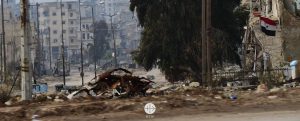
Königstein/Erbil, 27.01.2017. – “Hope is coming back to the Nineveh Plains” reports the Middle East expert of Aid to the Church in Need (ACN) after returning from a fact-finding mission from the Iraqi Christian villages liberated last November from ISIS. Father Andrzej Halemba, ACN ‘s head of the Middle East section, stated that, “despite the many urgent questions that need clarification, people are willing to return to their villages”. When asked about the nature of these “urgent questions” Fr. Halemba refers to the concerns of illegal property appropriations of the abandoned homes, an investigation into the alleged use of chemical weapons in the destruction of Christian houses and, for those Christian families who contemplate going home, the ongoing security fears of violence from isolated militant and fundamentalists who do not wish to see the Christians return.
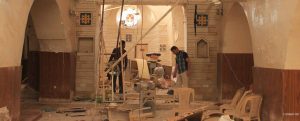
To get a firsthand understanding of the destruction Father Halemba visited all the Christian villages recaptured from ISIS. He reported that “most of the houses have been visited at least once by the owners because they want to see what is happening with their proprieties”. He recognizes a major change in the attitude of the IDPs since November of 2016: “We did a first survey in November to know if they wanted to go back to their villages. We saw that they were too afraid in view of the continued fighting in Mosul, also about the possibility of having terrorists still hidden in the area and finally concerns regarding the education of the children. The conclusions of this first ACN survey showed us that not more than 1% of people that wanted to go back. Now during my visit to Alqosh I was told that there are more as 50% of IDPs willing to return. And this number keeps increasing.”
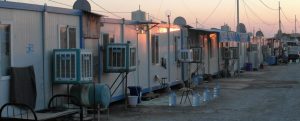
Speaking to ACN’s aid program for the next six months, Fr. Halemba detailed the current challenges facing the charity in supporting the displaced Christian families in Erbil until repatriation: “We have to help these refugees – especially now in a cold winter – get through each day. This means continuing our support for food baskets for over 12.000 families as well as for housing. We have been asked to increase our help to pay the rent. Previously we supported the rent of 641 houses, the equivalent of 1.800 families. Today that request has grown to help over 5000 families who live in over 3000 houses. This is a great challenge”.
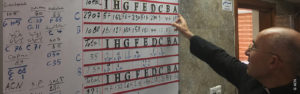
For this hope in the future, Fr. Halemba looks to the past calling the international community “to a new Marshall Plan”. Referring to the European Recovery Program initiated in 1948 by the United States after World War II to help Western Europe regain economic stability, Fr. Halemba states: “To have a proper understanding, one of the most important first steps is an initial assessment of the destruction. ACN is supporting Christian groups on the ground to make a professional evaluation. Thousands of photographs collated with thousands of descriptions of the destruction are being gathered together with an estimation of the costs to rebuild. With the help of satellite pictures the team identifies each house in each village in the Nineveh Plain recovered from ISIS. The houses we are speaking about belong to Syrian Catholics, Syrian Orthodox, Chaldeans and some mixed villages as well. We are talking about some 10 villages.”
The next step planned is a follow-up to the November 2016 survey about the intention to return of at least 1.200 Christians IDP families sheltered in Ankawa. Based on these two documents – the assessment of destruction and the survey of the intent to return – the pontifical foundation is encouraging the creation of a special committee to supervise a comprehensive Marshall Plan to facilitate the return.
What would this Marshall Plan for the Nineveh include? Fr. Halemba points to a variety of topics: “It has to include a consolidating report about the destruction, the creation of a local committee and a fundraising program for the reconstruction of the villages. ACN will be support of course the reconstruction, however, we have to work together with other charities, alone is impossible to manage this. Then the legal issues need to be considered; this includes, for example, the right to full citizenship of the Christians in Iraq and the involvement of the Iraqi government in the reconstruction. The government should be responsible for creating structures and job projects but also allowing Christians to be granted security in their villages. This is vital in light of their horrific experiences in the recent past. Awareness of and aid programs for this Marshall Plan for the Nineveh should also be raised at the international level. Finally it is very important to properly collate the documentation of the destruction and the violent acts persecution so that, in some way, a sense of justice and peace can return and to assure this never happens again.”
For Fr. Halemba, time is becoming short, estimating that the first weeks of February are crucial for the charity’s project planning: “We were expecting the families to start going back in June and ACN has to be ready to help them to go back. But latest information indicates that some families have decided to go back to the villages already during winter, despite the harsh weather conditions and very poor or destroyed infrastructure. We have to see if we can refocus part of our help from Erbil to a ‘start-up support’ for the Nineveh Plain. These people also rely on the Church – they look to the Church as a sign of security and stability and so ACN has to help religious sisters and priests to go back with their flocks. ACN has to support these people in this decisive and historical moment for Christians in Iraq.”

Recommended