South Sudan: Teaching children to read and pray in their own language
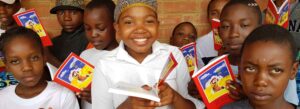
Translated into approximately 200 languages, for some children, ACN’s Child’s Bible is the only book that they own in their native language. Now, with the help of ACN, Fr Stefaan Lecleir, a missionary priest in South Sudan, is having the Child’s Bible translated in Pazande, the language spoken by the Azande people in parts of South Sudan, Central African Republic and the Democratic Republic of the Congo.
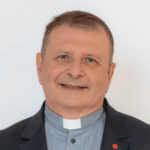
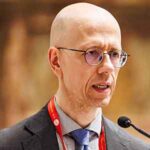
“About 95% of the people in my parish are illiterate,” explains Fr Stefaan Lecleir during a visit to the international headquarters of the Catholic charity Aid to the Church in Need (ACN). The priest, originally from Antwerp, is a missionary in South Sudan and, with the help of ACN, has been working on a project to help the children of his parish to learn to read and pray in their native language, Pazande.

The Belgian priest firmly believes in the importance of children learning to read in their own language. “This is the approach taken by most educational and children’s organisations,” says Fr Stefaan. “To learn to read and pray in your own language is very powerful and something that the children respond to very positively.”
A parish centred on prayer and children
Before arriving in South Sudan three years ago, the priest had worked in the seminary and radio with the Diocese of Antwerp. After asking his bishop in Belgium if he could become a missionary, Fr Stefaan was sent to the Diocese of Tombura-Yambio in the southwest of South Sudan, a region neighbouring the Democratic Republic of the Congo.
He was assigned to the parish of Sakure. “There are around 70,000 living people in my parish area,” states Fr Stefaan. “There are four villages and 11 other smaller settlements within the parish’s boundaries.”

Children and young people are at the heart of the parish’s ministry. “We have a youth centre and school in the middle of the parish,” the priest explains. The centre is active in promoting prayer, with 23 children aged 13-18 participating, and has a chapel that was recently constructed in the parish with help from ACN.
Translating the Child’s Bible
Reading is central to both the school and centre. There was, however, one problem. There was no version of the Child’s Bible available in the children’s native language, Pazande. “Those who can read are normally only able to read in English. There are not many books in Pazande so the children learn how to read in English, but the letters of the alphabet are pronounced very differently in Pazande compared to English,” explains the Belgian priest.

Fr Stefaan was already familiar with ACN from his time in Belgium and began working with the charity to translate the Child’s Bible into Pazande. “We had three native Pazande-speakers translate the text,” explains the missionary. “They are priests, including a director of the local university. After they had translated the text, I gave it to some young teachers, who are also native speakers, and had them read it out loud. That way we were able to edit the text so it sounded better when read out loud.” After the final text in Pazande was approved by the bishop, Fr Stefaan sent it to ACN, and the Pazande edition of the Child’s Bible is now being prepared for print and distribution.
The importance of local languages
Almost all Fr Stefaan’s parishioners belong to the Azande people and speak Pazande as their first language, with the Belgian missionary celebrating Mass in the language. This is not always the case in a country like South Sudan, which has many different tribes with their own languages.
“English is an important language to learn in order to advance in life, and it is good for the children to be able to speak it,” the Belgian missionary explains.
But despite the importance of English, Fr Stefaan says that it is still better to teach the children to read in Pazande first: “Starting with their native language allows them to learn how to read better and they can easily move on to learning how to read in other languages like English, as they have a firmer foundation in literacy. It also helps them to appreciate their culture by being able to read in their own language.”

According to the priest, the children like to learn to read in their native language and it also has another unintended benefit: “It is also helping me to improve my own Pazande. There is no better way to learn something than by teaching it to children.”

Recommended