Iraq: Two years after the liberation of Mosul, many Christians still fear to return
Exactly 2 years ago, on 10 July 2017 the Iraqi government declared the defeat of Daesh (ISIS). The liberation of Mosul took place three years after the city had been subjected to strict sharia law, including forced conversions, mass executions and a resurgence of slavery.
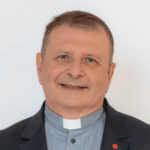
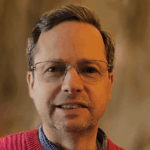
When the city was liberated, “no one believed that the Christians would return to Mosul”, explains Syriac Catholic priest, Father Amanuel Adel Kloo to the international Catholic pastoral charity and pontifical foundation ACN.
Father Kloo certainly decided to return. Currently, in fact, he is the only priest in Mosul. He feels that it is his mission to “serve beneath the Cross” and at the same time “maintain and salvage the historical legacy of the Christian people here.” A legacy that includes Christian churches dating back over 1200 years. As part of this same mission he is rebuilding the Church of the Annunciation, which will be the first Christian church to be restored in Mosul.
As he explains to ACN, no more than 30 or 40 Christians have so far returned to Mosul. But there is a much larger community of “itinerant” or rather commuting Christians. For example there are approximately 1000 Christian students who travel daily to the University of Mosul from the surrounding smaller towns and villages. Added to these are a few hundred Christian workers, most of whom are working for the government, repairing the water and electricity supply networks, which are still in a woeful state. Father Kloo is still hoping that some of these Christians will eventually return to Mosul.

In 2003 the Christian community in Mosul numbered around 35,000 faithful. In the 11 years that followed the beginning of the war to overthrow Saddam Hussein their number fell tragically, and the abduction and murder of Christians became an almost daily occurrence. Many of the churches had been closed down even before the invasion by IS, because many Christians had already left Mosul, following the murders in 2008 of the Chaldean Catholic Bishop Raho and Father Ragheed. By 2014 only around 15,000 Christians were still left, belonging to various different communities, including Chaldean Catholics, Syriac Orthodox, Syriac Catholics and some Armenian Christian families. With the arrival of the jihadists, the bells that had still sounded in Mosul for almost 2000 years now fell silent. Thousands of Christians fled the city immediately. Those who did not were either forcibly converted or else executed.
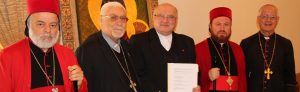
Today the city of Mosul, although almost devoid of Christians for the time being, continues to be the “nominal” seat of two important bishoprics in Iraq. Both these dioceses have been reinforced in recent months with the appointment of new bishops – in January with Najeeb Michaeel Moussa as Archbishop of the Chaldean Catholic Archieparchy of Mosul, and in June with coadjutor bishop Nizar Semaan, to support Archbishop Petros Mouche of the Syriac Catholic Archieparchy of Mosul.
Later, Father Kloo hopes to be able to build a complex with accommodation for university students and also for people in need. But the most urgent thing to him is to build a school, since almost the entire million or so inhabitants of Mosul are now Muslims and there are no Christian schools available in the city. Clearly, this is a decisive factor if any families are to consider returning.
Father Kloo is hoping that the Church of the Annunciation will be finished in three months time. And it is a still greater hope for him that this will signify a rebirth of Christianity in this historic city. “People are still afraid”, he says. “However, when the church and the other buildings are open, people will feel more secure … And many people will return.”
Following the invasion of Mosul and the Niveveh Plains in the summer of 2014 the pontifical foundation ACN provided food, shelter, medicine and schooling for displaced Christians and others arriving in Erbil and elsewhere. After the communities began returning home following the expulsion of Daesh, the charity began rebuilding homes, convents, churches and other structures. ACN donors gave €42.622.212 in aid to Iraq from 2014 until Mai 2019.

Recommended