ACN raises religious freedom concerns at European Parliament’s “Human Dignity” event
Aid to the Church in Need (ACN – International) recently took part in the “Human Dignity” event, part of the yearly “European Prayer Breakfast”, which was held on Wednesday, 3 December. The conference was held at the European Parliament and hosted by MEPs (Members of the European Parliament) Bert-Jan Ruissen (Netherlands, European Conservatives and Reformists – ECR) and Davor Stier (Croatia, European Popular Party – PPE), both of whom are committed to the defence of fundamental rights and religious freedom at the European political scene.
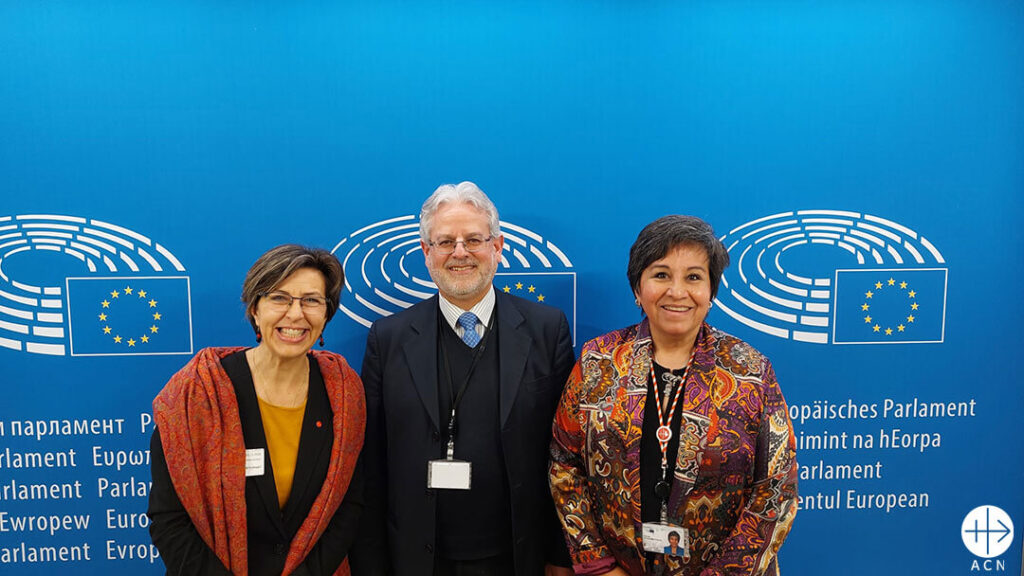
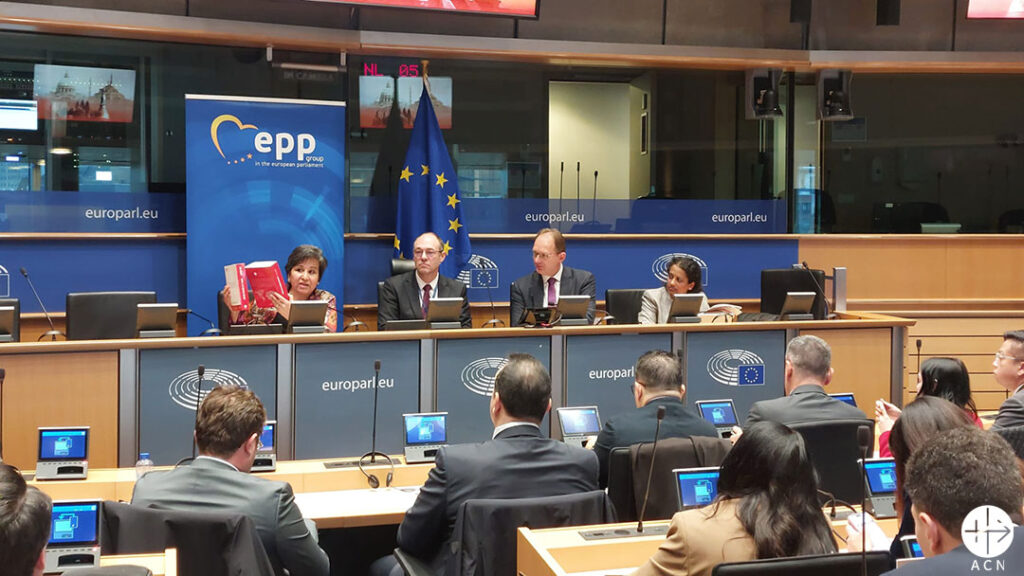
Political figures and international experts packed the conference room to reflect on human dignity, religious liberty and the persecution of minorities in different parts of the world. Speakers included MEPs Ruissen and Stier, as well as Marcela Szymanski, head of International Advocacy and Director of ACN’s European Union office, and Tehmina Arora, a lawyer and director of ADF International’s India office.
Human dignity as a cornerstone of the European project
During his intervention, Davor Stier, who before being an MEP was Minister of Foreign Affairs in Croatia, recalled the ethnic and religious conflict that afflicted his nation in the 90s, saying that horrors such as these can be prevented when one bears in mind that everybody shares the same human dignity, and is created by God, highlighting that this perspective triggers a radical change in one’s outlook on life, liberty and responsibility.
Bert-Jan Ruissen highlighted the centrality of human dignity in the European project, present since its origins. “Human dignity is Europe’s most noble achievement, and freedom is its true strength,” he stated, evoking the spirit of the European Union’s founding fathers following the Second World War.
Ruissen also pointed out that this principle is specifically enshrined in EU law. “Human dignity is inviolable. It must be respected and protected,” he stressed, in a nod to the European Union’s Charter of Fundamental Rights.
Defence of life and responsibility towards the most vulnerable
Ruissen also highlighted that human dignity implies two fundamental pillars: protection and responsibility. All human life should be protected from conception to its natural end, while human beings are called to care for creation and, especially, those who suffer: “We should not look the other way when people are suffering in Europe, but neither when they are in Africa nor in Asia.”
ACN presents Religious Freedom in the World Report
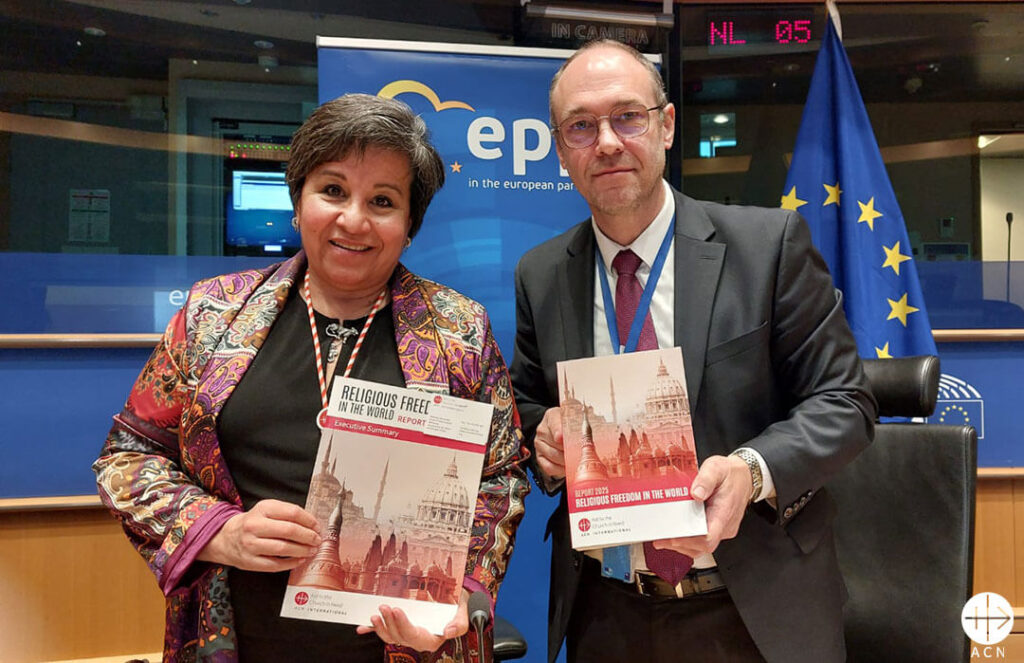
ACN International’s head of International Advocacy, Marcela Szymanski, presented the main findings of the Religious Freedom in the World Report (RFR), and explained that religious persecution continues to increase in several regions of the world, with millions of people in the world deprived of the right to live their faith freely. Violations of this right are not diminishing, among other reasons because aggressors, their ideologies and sources of income do not recognise borders, which gives them increasing impunity.
Szymanski explained that ACN’s RFR report includes a thorough legal and political account of attacks, discrimination and restrictions against believers of different confessions in more than 190 countries, and that the most serious cases are in Africa, the Middle East and Asia.
Religious Freedom in India – a harrowing situation
Tehmina Arora’s intervention was another striking moment of the conference. The director for India of ADF International, an organisation that provides legal counsel to victims of human rights violations, provided a very harsh description of the situation endured by religious minorities in her country. Arora described cases of kidnappings of Christian girls, forced marriages and conversions, denial of burial and systematic legal persecution.
The lawyer also shared worrying figures about the rise in physical assaults in India, warning of an unprecedented rise in violence and social pressure against Christian communities and other religious minorities. Since 2012 Arora has managed to secure important legal victories in cases involving anti-conversion laws, false accusations and arbitrary closure of places of worship.
Warning call for the European Union
The event was very well attended by a diverse crowd, including representatives of European institutions, international organisations, human rights experts and religious leaders.
Among the closing interventions, special attention goes to Slovakia’s Jan Figel, who was the EU’s first Special Envoy for Religious Freedom. Figel issued a strong warning call to European institutions, saying that the role has been vacant for too long and reminding member states of their obligation to protect fundamental rights. Figel called for the urgent nomination of a new special envoy, saying that the delay is a worrying sign of how the defence of religious freedom is not a priority in the European Union’s foreign policy.