Cardinal Parolin tells “heroic” Christians of Mozambique: “You are not alone!”
In a risky trip to Cabo Delgado, home to a ruthless jihadist violence, the Vatican’s secretary of State thanked the work of Aid to the Church in Need.
Cardinal Pietro Parolin recently concluded a trip to Cabo Delgado, an insurgency-ridden region in Mozambique, where he met with the local Christian community in a show of solidarity from the Vatican and Pope Leo XIV.
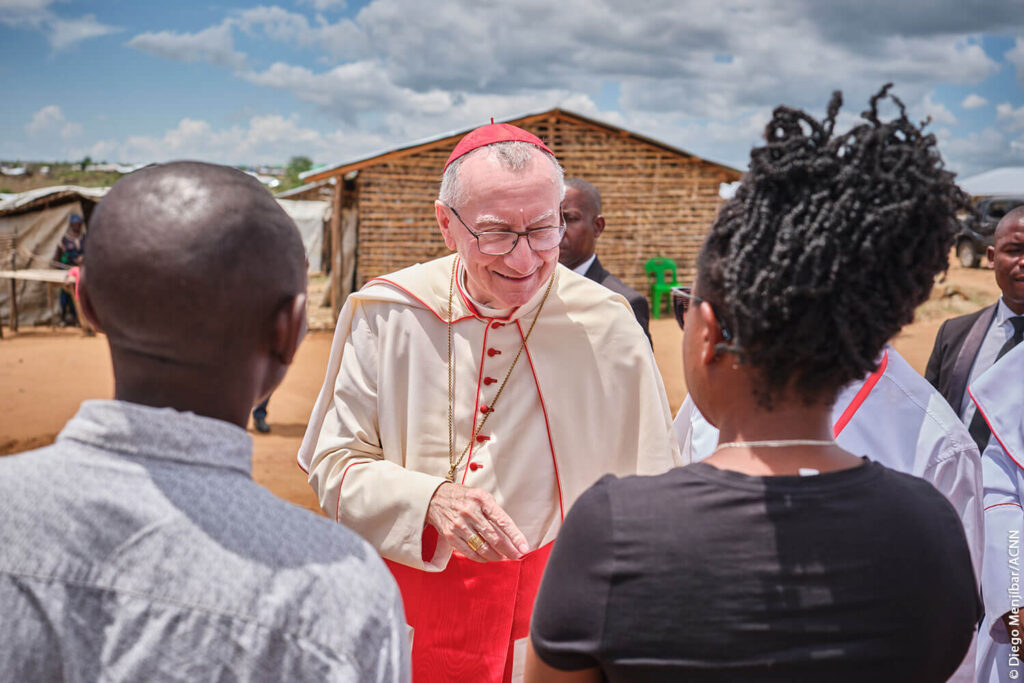
Although Mozambique is mostly a Christian country, Cabo Delgado, in the north-east, is majority Muslim and since 2017 has been racked by a violent jihadist insurgency with more than 6,300 dead and a million displaced. According to Bishop António Juliasse of Pemba, which covers Cabo Delgado, more than 300 Catholics have died in the past eight years, 34 of them in 2025 alone, mostly beheaded.
“I came to tell all of you, men and women of the people of God who live in Cabo Delgado, that you are not alone. You are not alone! The Holy Father, and the united and Universal Church are with you. Your suffering, your fears, but also your hopes are in the heart of Mother Church and hold a special place in the heart of the successor of Peter,” the cardinal said, speaking Portuguese.
Cardinal Parolin highlighted the “heroic witnesses of faith of so many of our brothers and sisters who remained faithful to Christ in these times of pain and strife, and also of those who were killed without denying the name of Jesus.”
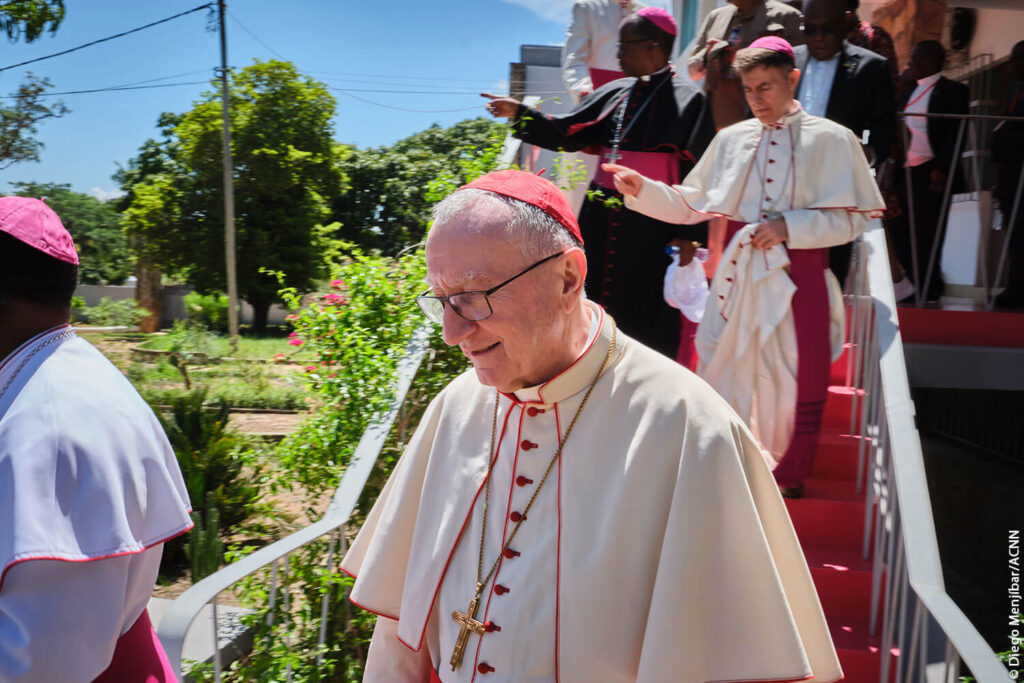
Pope Leo’s Secretary of State was visibly moved as he listened to the testimonies of those whose lives have been upended by the violence in Cabo Delgado, including one Christian who lost three brothers and an uncle to the terrorists, and several religious who carry out their mission in the most dangerous zones, risking their lives to serve God.
“Cardinal Parolin greeted the displaced one by one, shaking their hands and blessing their children. It was as if he wanted to embrace each and every one of them, and touch their deepest wounds, so as to participate in their suffering and their hope,” said Bishop Juliasse in a message to Aid to the Church in Need (ACN).
The Bishop of Pemba said that during the two-day visit in his diocese Cardinal Parolin was given the opportunity to hear first-hand what it means to “be a Church in a context of jihadist violence, a persecuted Church, a suffering Church”.
Fr Eduardo Roca, who is responsible for interreligious dialogue in the Diocese of Pemba and an ACN project partner, explained to the charity that the Cardinal’s visit provides the local clergy and catechists with “the moral strength to know that we will never be alone, that the Church is concerned, that it accompanies and protects us. When you are in a mission such as this, with so much violence, so many threats, it is important to feel that the Church is present, that it supports you, and that you are not alone. This is crucial.”
Cardinal highlights the work of ACN
ACN has been supporting the Diocese of Pemba in its response to the crisis in Cabo Delgado since the beginning of the insurgency, providing trauma care and emergency subsistence support, as well as means for pastoral agents to carry out their work.
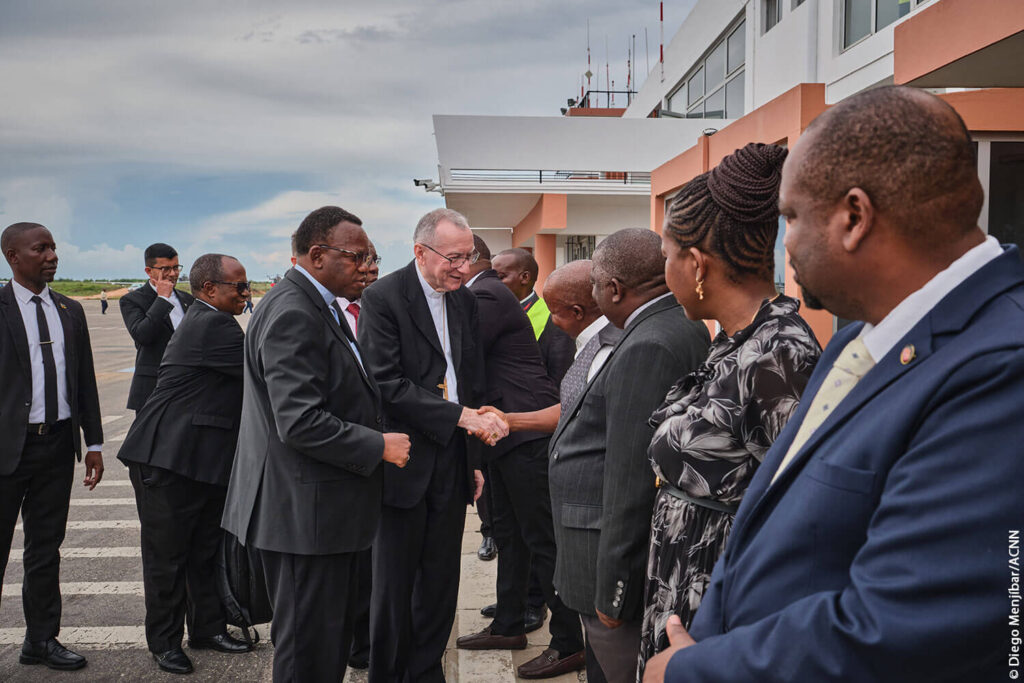
The cardinal expressed his gratitude for the charity’s work, saying: “I now see the role that Aid to the Church in Need is playing here, and it is very good!”
Cardinal Parolin recalled that he has been familiar with ACN’s mission since his days as Apostolic Nuncio in Venezuela, between 2009 and 2013. “We had many opportunities to cooperate then,” he said, and addressing the pontifical foundation directly, added: “please continue to support and help these communities which are in such need. We really have to show them the solidarity of the universal Church in a very concrete way, and that is what you are doing.”
The Cardinal’s visit to Cabo Delgado came during a five-day trip to Mozambique, between 5-10 December. The purpose of the visit was to mark the 30th anniversary of the establishment of diplomatic relations between Mozambique and the Holy See, following a Church-mediated peace treaty which put an end to decades of civil war in the country.