Nepal: the tiny Catholic community unsettled and fearful after the unexpected attack on the Cathedral of the Assumption
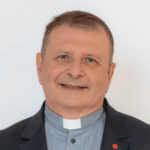
Königstein/Kathmandu, 28.04.2017 .- On 18 April a deliberate arson attack caused some damage to the rectory attached to the church of the Assumption, the cathedral church of the apostolic vicariate of Nepal, which is situated on the outskirts of the capital Kathmandu. No one was injured and the damage was solely material. Nonetheless, according to the vicar general, Father Silas Bogati, the attack “has harmed the tiny Catholic community, which is now afraid. We are trusting in God, but what has happened is a call to be vigilant.” The attack has taken place in the midst of a very delicate political situation in the country, which is preparing for the forthcoming local elections on 14 May – the first to be held in Nepal for almost 20 years – and which are expected to be followed by Parliamentary elections in January 2018.
The attack took place at 3 a.m. on 18 April. Speaking to the international Catholic pastoral charity and pontifical foundation Aid to the Church in Need (ACN), Father Silas described how at least three individuals enter the compound, using petrol to set fire to 2 motorcycles and a car that were parked in the yard. At the same time they poured petrol on the walls and the door of the church, which were badly damaged. Also within the compound is the rectory, in which 10 people were staying at the time. “Thank God the vehicle they set on fire did not explode while the people were being evacuated, but it could well have been a tragedy. The building itself was extensively damaged by the fire, but no one was injured.”
Asked about the motives for the attack and the perpetrators behind it, Father Silas was very cautious: “We still don’t know who was behind it, nor the motives for the attack. The police are investigating the event and attempting to identify the three people seen on the security cameras at the time of the attack. Once we know more about the perpetrators, we will be clearer about their motives. For now everything would be speculation.” The Nepalese priest did however acknowledge that “from time to time we Catholics here feel discriminated against, and even though we are Nepalese citizens, we are treated like foreigners, based on the mere fact of being Christians. Unfortunately, in some sectors of society there are feelings of hostility towards the Christian communities.” Nonetheless, he also emphasised that in general “we get on very well with our neighbours, most of whom are very open and considerate towards us. In fact they were the first to help us and to call the police. Those who behave otherwise are a minority.”
This is not the first time that the tiny Catholic community in Nepal has been the victim of attacks. In May 2009 a bomb exploded in the cathedral just as Father Silas was celebrating Holy Mass, killing three people and causing over a dozen injuries. “It was the saddest moment in my life. We never thought that anyone could possibly attack a sacred place of prayer. I was very traumatised after the event.” Responsibility for the attack at that time was claimed by a Hindu fundamentalist group calling itself the Nepal Defence Army.
“Since that incident in 2009 we have had several years of peace, but this recent aggression is a call to be very vigilant. Of course, in the end the ultimate security comes from God, but we need to reconsider how to improve our security measures and improve the protection of our community”, the vicar general told ACN during the telephone conversation.
The Catholic Church in Nepal is a tiny minority but very active in the area of social help and development, Father Silas explained. “Just in the last few days we were remembering and praying for the victims of the violent 7.8 magnitude earthquake that struck Nepal exactly 2 years ago, on 25 April 2015. The Catholic Church is engaged in a major reconstruction project in the local area, with the rebuilding of 5000 homes for those affected, the supply of clean drinking water and other neighbourhood development programmes for local people. Many people are benefiting from this aid without regard for their religious affiliation. We intend to continue providing this aid, because our vocation is to help the most needy, as we are helping the victims of the earthquake today.”
According to the Report on Religious Freedom Worldwide published by ACN last November, the Catholics within the apostolic vicariate of Nepal number around 8000 faithful. The Protestant communities, above all the evangelical and Pentecostal groups, are very much present in the country.
As the above-mentioned religious freedom report describes, the very young Democratic Federal Republic of Nepal – formerly a Hindu kingdom – adopted the character of a secular state in the year 2007, one year after the abolition of the monarchy and following a decade of civil war between the government armies and Maoist guerrillas. Currently the pressure exerted by the Hinduist parties is very strong, a fact which, added to the many other difficulties (above all relating to the establishment of the internal frontiers within the seven provinces) has made it almost impossible for the members of the constituent assembly to reach agreement. In August 2015, following the earthquake on 25 April of the same year and under pressure from the population, the major political parties in Parliament finally came to an agreement, described by many Nepalese as “historic”, and on 16 September the constituent assembly finally approved the constitution, thereby concluding a laborious and delicate process begun eight years earlier. The new text affirms the secular character of the Nepalese institutions while at the same time greatly curtailing religious freedoms.
The elections on 14 May will mark a crucial step in the establishment of the new republican institutions envisaged under the constitution. And so Father Silas is calling on the international community and ACN members “to pray for the Catholics and at the same time for the whole country, so that the political process of the next few weeks will unfold peacefully and bring about the long desired stability for the country”.

Recommended