Huancané: Living the faith in the highest inhabited place in the world
Between coca plantations, illegal gold mining and a lack of vocations, Bishop Giovanni Cefai of the Prelature of the Santiago Apóstol of Huancané speaks about the difficulties of trying to evangelise in such a challenging atmosphere.
The Prelature of Santiago Apóstol of Huancané, which was formed in 2019 and is dependent on the Archdiocese of Arequipa in Peru, has a population of about 200,000 people and covers an extensive territory that includes jungle, harsh and inaccessible Andean Mountain ranges and the banks of Lake Titicaca. Some of these areas reach extremely high altitudes, between 3,800 and 5,000 meters above sea level. Breathing becomes difficult above 2,500 meters, and the cold is merciless.

La Rinconada sits at an altitude of 5,100 meters, in the region of Puno in the Peruvian Andes. This is the highest permanently settled community in the world. It is largely populated by goldminers, some of whom operate illegally. Living conditions are terrible and inhumane. There is no sewage system, no waste collection, many houses do not even have windows, and some of the local lakes are poisoned with mercury. The result spells disaster for the health of the almost 30,000 inhabitants.
Bishop Giovanni Cefai, a Maltese member of the Missionary Society of Saint Paul (MSSP), is the first head of the Prelature of Huancané. He says he is “grateful to God” for having been called to serve there, and stresses how important it is to evangelise in La Rinconada. “Many of these people feel abandoned. Therefore, we should, as Pope Francis says, go to the furthest reaches of the world in search of the people of God, to tell them: ‘Courage, brothers. God is merciful, God is love, and He will never abandon you’”, says the bishop.
In places such as La Rinconada, where economic opportunities are scarce, planting coca becomes an attractive option to generate revenue. “There are many plantations of coca, which sadly are immediately used to produce cocaine”, Bishop Giovanni explains. One of the projects of the prelature is to try and find alternative sources of income, so that they “can steer clear of things that cause environmental or human tragedies, such as mines or drugs. For example, we are promoting the growing and roasting of our own coffee. These should be the first steps to produce and market what we will call ‘friar’s coffee’”, the bishop says, enthusiastically.
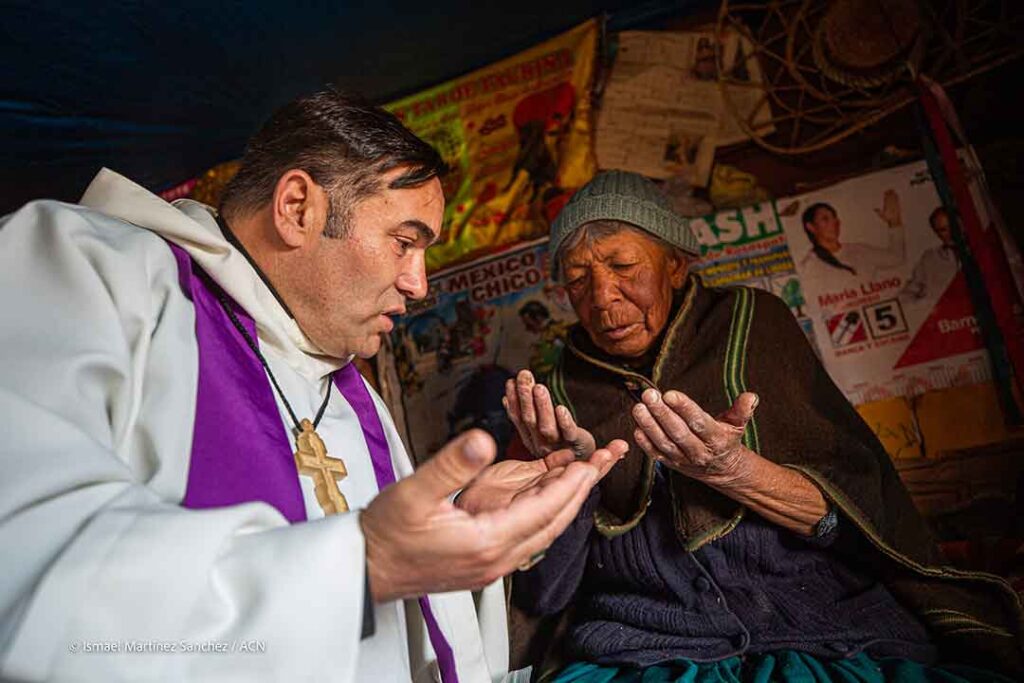
But the challenges of evangelisation go beyond working conditions or altitude. Besides Spanish, the local population speaks Quechua and Aimara, languages that are indigenous to large parts of the Andean region. The Church has played an important role in preserving and promoting these languages, thanks to bilingual education, the translation of the catechism into native languages and its support for indigenous culture.
Lack of priests
Since it was erected, the prelature has faced a significant challenge. “We are starting from zero. We lack classrooms, schools, chapels, homes for the priests to live with some dignity… But a missionary never stops dreaming, he never loses hope. He places his hope in God and in benefactors”, says Bishop Cefai.
With only 16 diocesan priests, five women religious and four seminarians, the work of serving the faithful spread over such a large territory is a constant challenge. Which is why Aid to the Church in Need (ACN) has funded, among other projects, the purchase of vehicles to make it easier to access the more remote areas. One of the priests in the diocese, Father Yohan, who is originally from Colombia, explains that “this is a mission which entails much effort and wear and tear, because the communities are very far apart. It takes up to 10 hours to reach some of them. By the grace of God, this place has preserved a popular faith, and many people hunger and thirst for God.”
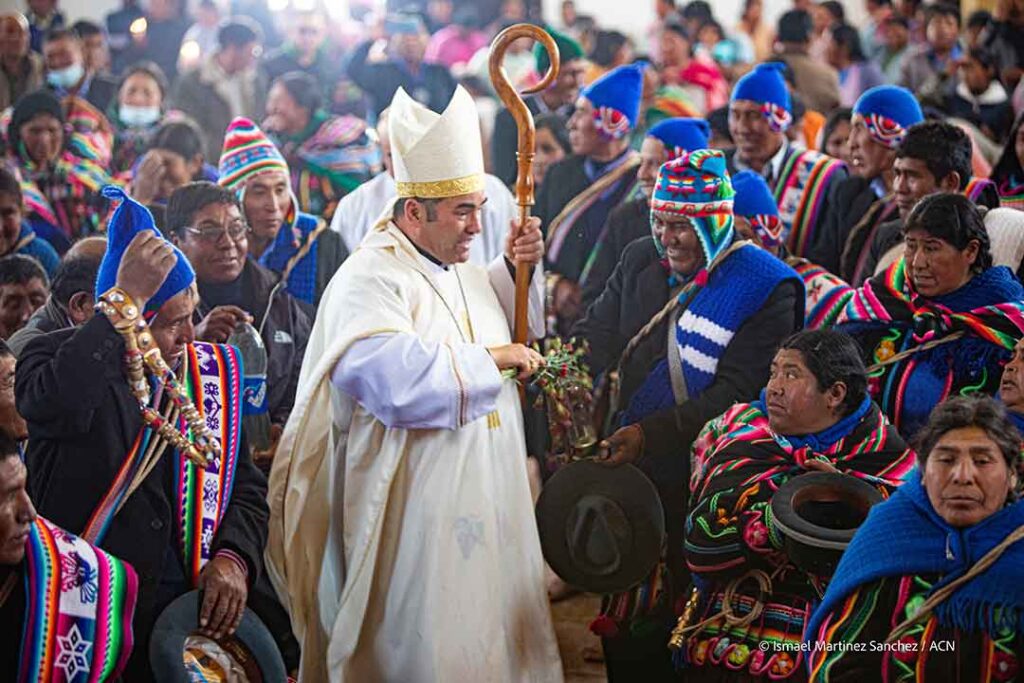
Bishop Giovanni says that he needs “missionaries, people who are willing to renounce the material. I believe that this is what the Church is; to be a missionary who, as Saint Paul said, knows no borders: despite the exhaustion, despite the travelling, and to be ready for everything. To be a missionary is a beautiful thing. There is no point in just comfortably living my faith, faith is more beautiful when it is shared with others.”
“But you don’t need to leave home to be a missionary, you can do so by praying and supporting the missions. All that is left is for me to encourage you and give thanks. Thank you for being part of our mission, thank you for being united to us in your prayers and with your support. From here, I call on you to come, and to be part of this mission, join us, and God bless you”, the bishop says, in a message to all of ACN’s friends and benefactors.
ACN has funded several projects in the Prelature of Santiago Apóstol of Huancané, including the construction of an administrative pastoral centre, the purchase of vehicles for the prelature’s vocational department, and Mass stipends for priests. These ACN-supported initiatives have been essential in the development and sustainability of the region’s evangelisation efforts.
By Lucía Ballester.

Recommended