Cuba: “The Communist ideology has fundamentally changed society”
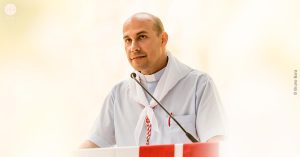
In a country shaped by half a century under Communist rule, a country facing a lack of economic prospects and the disintegration of the traditional family, the Church in Cuba remains steadfast. Father Jean Pichon is a priest from the Community of Saint Martin who serves in Santa Clara, a diocese located at the heart of Cuba. He has answered the questions of the international foundation Aid to the Church in Need (ACN), which supports the priest in a number of evangelisation projects.
ACN: How do you see Cuban society today?
Cubans are caught between a rock and a hard place: on the one hand, living costs are on the rise, on the other, wages and salaries continue to fall. They are currently stagnating at 20 to 30 dollars a month. A large number of Cubans have moved to other countries, particularly Spain. This has contributed to the dissolution of families and the destruction of social ties within the country. Besides the economic issues, which are, of course, significant, I believe that Cuba’s primary problem is the collapse of the family. The father-figure has ceased to exist.
You say that the family, and particularly fatherhood, has been weakened in Cuba. What do you believe has caused this?
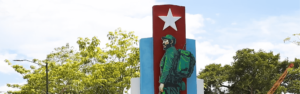
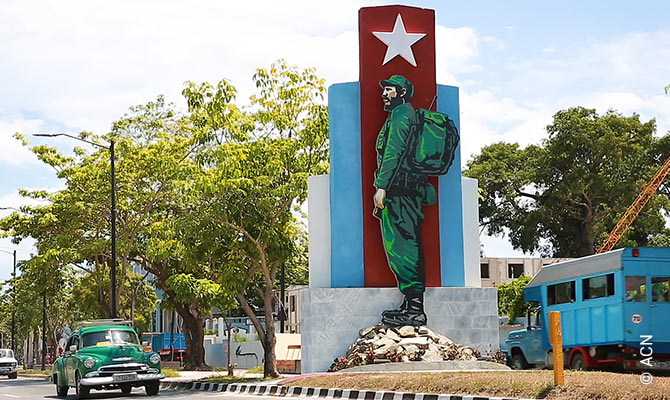
When I arrived on the island, an older priest told me that there were only biological fathers here, no real fathers. I believe that the Communist ideology has fundamentally changed society. For half a century, it was not the father who protected and nurtured in Cuba, but Fidel Castro! There is a very strong bond between mothers and their children, but the fathers are not around. I also think that the pressure exerted by the regime has led young people to see sexuality as one area in which they can be free. There are a lot of single mothers here and prostitution has become a gigantic problem. Weddings are a rare occurrence and most young people just go from one partner to the next.
What are your duties in a society that is at such odds with itself?
When I talk with young people, I cannot suggest that they abstain from sexual relationships until they marry. That would be too far removed from the reality in which they live. But I do try to get them to at least associate sexuality with love. However, in spite of everything, a few couples do marry. Another problem is that there are hardly any vocations to the priesthood; this is a well-known problem here in Cuba. When I drove to a remote village in 2009, an old lady told me that she had not seen a priest in over 50 years.
But don’t the Cubans continue to be very devout?
They are an endearing people and full of paradoxes! There are many followers of the Santeria among the Catholics. This religion is inspired by animism and likes to recruit its followers from among people who have been baptised in the Catholic faith. The influence of the materialistic Marxist ideology is also palpable. However, the Cubans who define themselves as atheists or agnostics are often the ones who deeply revere the Virgen de la Caridad (Virgin of Charity). This statue of Our Lady was found on a beach by slaves gathering salt and has become a point of reference for all Cubans of all religious persuasions. I can tell you an anecdote that clearly demonstrates this. One day, I knocked on the door of a Cuban who at first refused to open the door when he saw that I was a priest. This is very unusual for Cubans, because they set great store by hospitality in this country. However, when I told him that we were organising a procession in honour of the Virgen de la Caridad, his eyes lit up. He answered that if it were for her, then he would also attend… The Virgin of Charity is often able to open the door to the hearts of the Cuban people for us.

Recommended