Bolivia: Support for six religious sisters in the poor parishes of the Andes
They travel to places where a priest can rarely visit. In the poorest, remotest and most inaccessible regions, the Missionary Sisters of Jesus Word and Victim (Misioneras de Jesus Verbo y Victima) minister to the people in their poverty and abandonment and bring them hope. The congregation was founded in 1961 in Peru and is active today in no fewer than seven countries of Latin America.
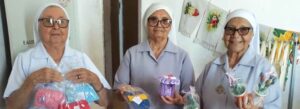
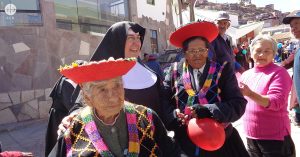
In the archdiocese of Sucre in Bolivia there are six of these sisters living and working in three parishes of the Andes. Immediately recognisable by their blue habits, they come from various countries – one from Argentina and the other five from Peru. The mountain trails are long and difficult, there are poisonous snakes and the sisters have to negotiate steep and rocky slopes and sometimes even wade through streams that have turned into rushing torrents as a result of the heavy rainfall. And even before this, the sisters have first had to learn the local Quechua language, which is widely spoken by the indigenous population. „That was hard!“ recalls Sister Maria Augusta, who has now been working as a missionary for 37 years.

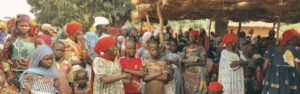
She tells us about her work. „We sometimes travel for 12 to 14 hours on mules or on two wheels, to visit our people, who are hungry for God. By the time we arrive we are exhausted, but recollected in spirit. The people are waiting for their ‚shepherdesses‘, you see“, she tells us.
The sisters pray with the people, tend to the sick and comfort the dying in their last moments, bring the people Holy Communion, baptise the children, conduct funerals and liturgies of the Word and give catechetical instruction. They draw strength for their tireless service in these immensely difficult conditions from their contemplative life prayer. And at the same time they also bring the people real practical help in their concrete cares and needs of everyday life. Since there are no doctors available, the sisters provide whatever medical care and advice they are able to.
However, the sisters themselves receive nothing for their ministry of loving service and are completely dependent on outside help. We are proposing to support them in their modest lifestyle with a contribution of 3600 Euros for the coming year. Would you like to help us?

Recommended