Bishops of Venezuela ask country to come together for national reconciliation
The bishops’ have asked for the release of political prisoners, for oil revenues to be applied to help the lower classes, and for the country’s sovereignty to be respected.
The Catholic charity Aid to the Church in Need (ACN) joins the bishops of Venezuela in their request that all sectors of the country work together for national reconciliation. The bishops propose that this task be based on the notion of respect for national sovereignty, the release of all political prisoners and the use of revenues from the oil industry to offset poverty among the population.
The bishops detailed their ideas in a pastoral exhortation in which they assess the current and future situation of the country following the arrest of Nicolás Maduro. “As Christians and as pastors, and in light of the concerns and fears raised by the social, political and economic situation our country is facing, especially following the events of 3 January of this year, we wish to convey a message of hope to the people of Venezuela,” reads the exhortation, which was published after a plenary assembly.
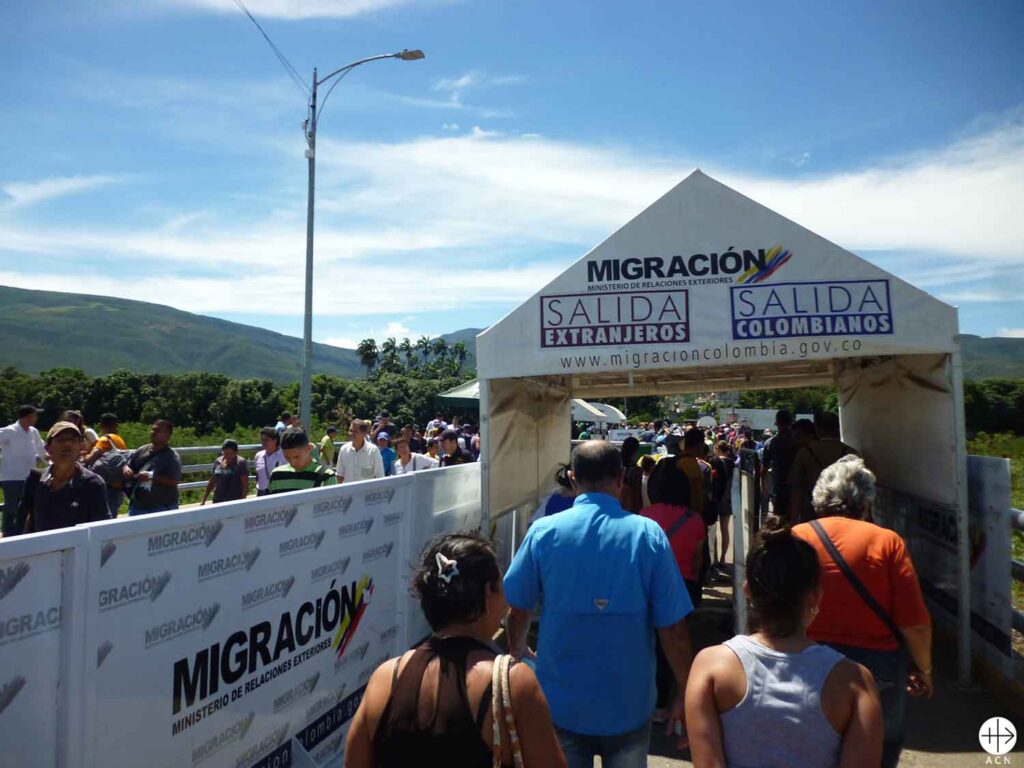
The prelates begin by expressing their “closeness and solidarity” with several of the worst-affected sectors of the population, beginning with “the political prisoners and their families; the millions of people who have had to emigrate, with the consequent disintegration of families; those who have been subjected to abuse and human trafficking; the many Venezuelans who do not make enough money to cover their basic needs; the elderly who have been abandoned and are lonely; the sick who are unable to obtain medication and access to necessary health services; the young people who have seen their opportunities for professional and academic success cut short; professionals in the education and health sectors who have been earning miserable salaries; indigenous communities who have been highly marginalised and neglected; those who have lost their property through arbitrary confiscations, and so many others who suffer for different and unjust reasons.”
The Church states its commitment “to the promotion of the common good” and asks that all sectors in the country place this goal ahead of “personal, ideological, party political or economic interests”. This requires “processes of reunion, mutual recognition, forgiveness and reconciliation, purification of memory, in truth and justice, with a firm commitment to respect the dignity of persons and the continuous exercise of fraternity”. The statement makes it clear that “this path of education for peace implies non-violence and reconciliation (…) this does not mean to forget, but to remember, make reparations and rebuild bonds of fraternity”.
In view of a “democratisation of the country” the bishops ask for “guarantees of national sovereignty” and note that this has been “seriously hindered” by years of “undue interference by external factors”.
In order to achieve peaceful progress, they ask for the repeal of all laws which curtail fundamental freedoms such as freedom of speech, the right to vote or the activities of civil organisations, and demand “the full release of all political prisoners and those detained for unjust reasons”. A possible amnesty law, which the bishops support, should “be the result of extensive consultation with all sectors of civil society” and would represent “an important step forward in the long and difficult path of national reconciliation and the reestablishment of civil and democratic coexistence”.
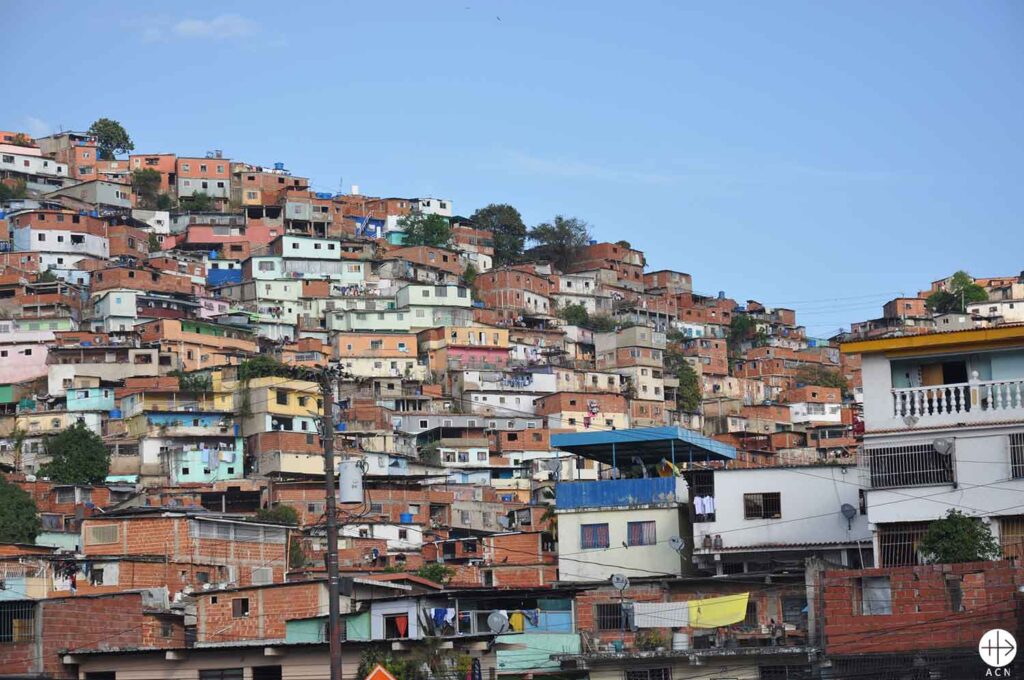
In order to offset the poverty which “weighs down upon a majority of the population”, the Church leaders ask that “the revenue from the reactivation of the oil industry be used to improve salaries and to implement social programmes (…) that ensure dignified work and pay”.
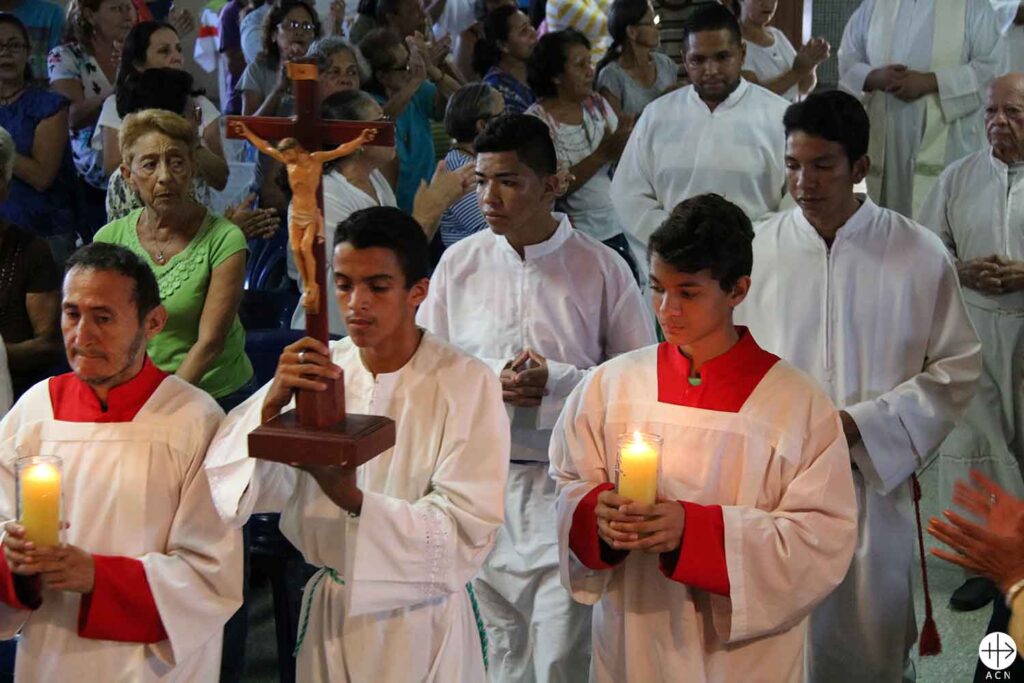
Finally, the bishops pledge that all Church institutions will be “places of encounter, listening and accompaniment, that will generate clear and credible signs of fraternity and reconciliation” and propose that Catholics seek “through daily prayer, light and strength to firmly face the situation we are now living in”. They conclude by entrusting themselves “to the maternal intercession of the Blessed Virgin Mary of Coromoto,” asking that “every one of us assume our responsibilities, courageously and generously, that together we may reach progress for our country through paths of liberty, justice and peace”.
ACN has been supporting Church institutions in Venezuela for over a decade in order to ease the difficult circumstances they face. Through its projects, the charity has offered spiritual and material support for priests, religious and pastoral workers to continue their missions, despite limited resources.