Algeria: The “Son of St Augustine” visits Annaba
The Vatican has officially confirmed that in the coming April, Pope Leo will visit Algeria, making this the first ever visit from a current pope. Leo XIV, who is an Augustinian by formation, will visit Algiers and Hippo Regius – the historical name of Annaba – following in the footsteps of St Augustine.
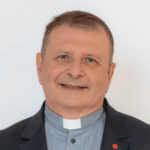
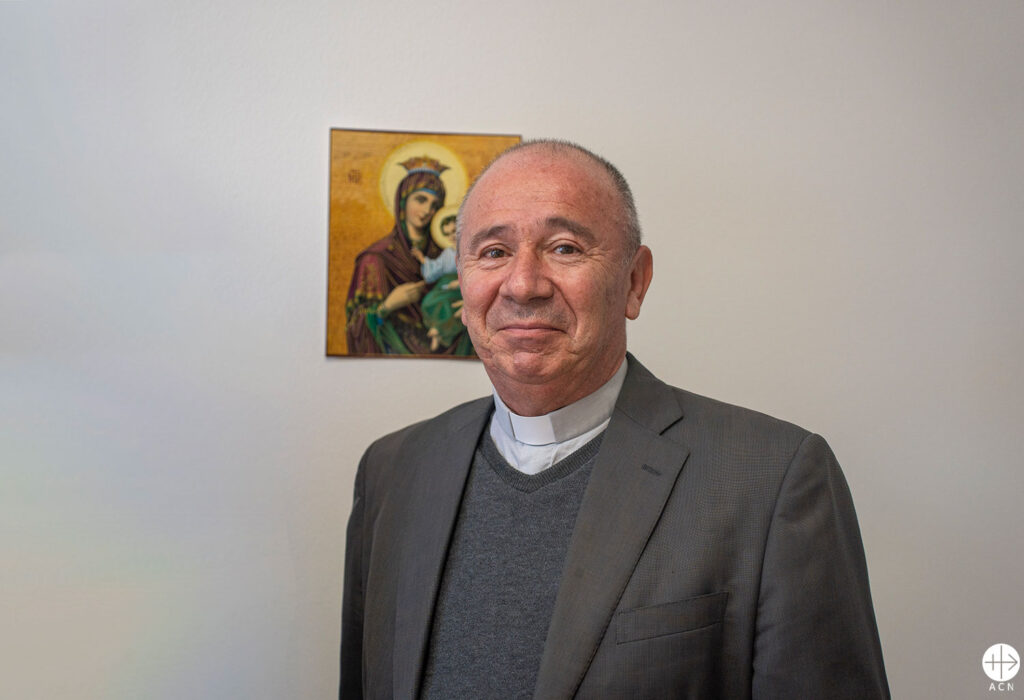
In this interview with Aid to the Church in Need, Bishop Michel Jean-Paul Guillaud of Constantine-Hippone speaks about the Church’s expectations for the visit and how the Church endures in the mostly Muslim nation of Algeria.
How did the Algerians receive the news of Pope Leo XIV’s upcoming visit?
It is, above all, a source of great joy and encouragement. And even though the early Church had three North African popes – Victor, Miltiades and Gelasius – this will be the first visit of a pope to Algeria.
For the Christians, it is more than a small Church like ours could ask for, but it is a great grace! He has already been here twice as the prior general of the Order of Saint Augustine, once for a conference on Saint Augustine, and once to mark the restoration of the basilica. Now he is coming to meet with the Algerian people themselves, which is wonderful.
Many people have told me they look forward to this visit. The whole country was deeply moved when, after his election, he described himself as a “son of Saint Augustine”. At first some thought he meant it in a geographical sense, but they soon understood that he was talking about a spiritual sonship. The fact that he is dedicating three days to North Africa, in a Muslim majority country, is a strong sign.
There is also the feeling that the Pope is not only at the service of Catholics, but of all of humanity.
How important is Saint Augustine for Algeria today?
After independence, the country did not really lay a claim to his heritage, but things began to change, especially after the conference of 2003, organised by the Islamic High Council, in cooperation with the University of Freiburg. This conference, “Saint Augustine: Africanity and Universality”, was a turning point. Algeria began to recognise Saint Augustine as one of its own, and since then there have been other publications on the topic.
Currently tens of thousands of people visit the Basilica of Saint Augustine in Annaba every year, and 99% of them are Muslims. The state contributed to the basilica’s restoration. Saint Augustine is seen as a common heritage.
Every year, around the date of his birth, 13 November, we organise the Augustinian days, with conferences, plays and talks by Christian and Muslim authors, so that people can learn more about him.
How has Christianity in Algeria evolved since you arrived?
Following independence and the exodus of the Europeans, the Church shrunk considerably. This reduction accelerated with the nationalisations, Arabisation and the conflicts in the 90s.
But since the 80s, a new reality began to emerge, with the arrival of sub-Saharan students on scholarships. Now, around 80% of our community is composed of sub-Saharan African students from countries like Uganda, Tanzania, Zimbabwe, Mozambique and Angola. The presence of all these nationalities also poses a linguistic challenge for us, but we are happy to be a young and dynamic Church.
What is your diocese currently like?
The Church is present in seven places in eastern Algeria, each separated by about 100 km. The diocese covers an area of 110,000 km² and it is served by about 10 priests and around the same number of female religious. But not all the communities are covered.
This has forced us to rediscover the fact that the foundation of a Christian community is, above all, the presence of Christians. Béjaïa, for example, is only visited by a priest two times a month, but the faithful gather every week to read the Scripture together. Occasionally students will travel long distances to attend Mass, and they will stay for the weekend and share meals. We have seen the Church become a familiar, fraternal and welcoming place.
And what do you do when locals ask to be received into the Church?
The authorities are fully informed of what we do, and they respect individual conscience, as long as we do not proselytise. When we get such a request we proceed with careful discernment, without getting ahead of ourselves, watching out for the good of the people and we demand a thorough preparation before they might be baptised. Often, we find that any difficulties that arise come more from the families than from the authorities. Changing religion can be a painful process in a society that is deeply connected to its heritage.
And how are your relations with the Protestant churches?
In some of our parishes, Catholics are a minority among Christians. They may not have the opportunity to celebrate the Eucharist every week, and in that case, they dedicate themselves to Bible study.
In Constantine, for example, we organise meetings with a Methodist church, especially during the annual week of prayer for Christian unity. The whole setting is very favourable to a concrete ecumenism, centred around the essentials.